Stainless steel pressure sand filter nozzles -- filtration solution for (wastewater)water treatment plants/drainage systems/gas separation/ion-exchange mix bed, etc.
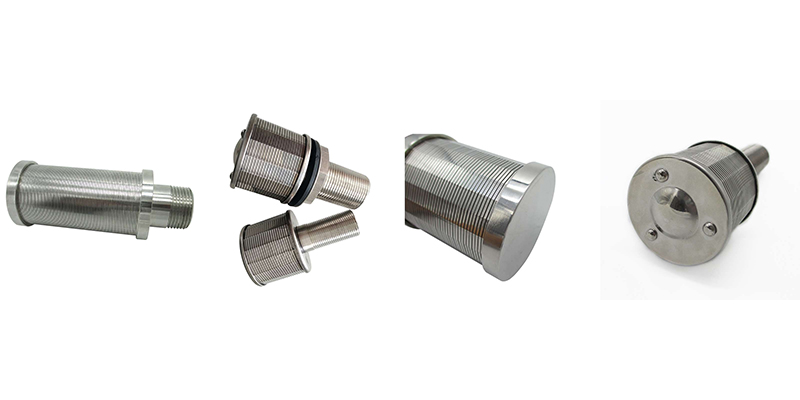
SS pressure sand filter nozzles(also called water filter nozzles or wedge wire nozzles) are designed to be used for liquid separation or media retention (resin, sand, carbon…).
The main material is high-quality stainless steel(ss316, 304, 321, and other alloys). The structure is a wedge wire screen. V wire profiles and support profiles are welded and wounded together at equal intervals.
YUBO can custom produce and design stainless steel wedge wire pressure sand filter nozzles for your industrial applications.
WhatsApp: 86 13653285589
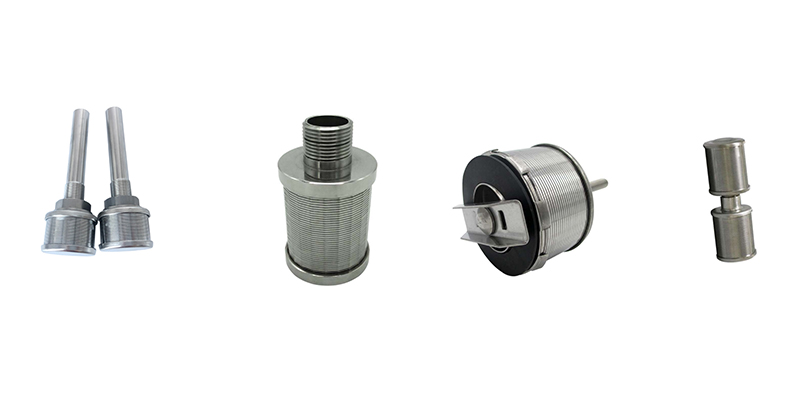
This article revolves around the following topics:
1. Features of pressure sand filter nozzles
2. How does the ss filter nozzle work?
3. How do we pick the right ss pressure sand filter nozzles?
1. Features/Benefits of pressure sand filter nozzles
· High-precision slot spacing
· Large filter area
· Backwash and self-cleaning function
· Design flexibility
2. Work principle of ss pressure sand filter nozzles
· Direction of flow in nozzles(inlet to outlet)
The inlet-to-outlet flow is the start-up of the filtering equipment where the nozzle captures the already filtered or treated water.
· Direction of flow in nozzles(outlet to inlet)
Outlet-to-inlet flow(backwash flow) occurs when the filter enters backwash or cleaning mode and reverses flows in reverse. Water enters the outlet to lift the media bed to expand, loosen and clean it of retained sediment.
3. Choose methods of ss pressure sand filter nozzles
· Filter Media Properties
The particle size of the media should be twice the size of the nozzle slot. so that the media cannot pass through the filter slot.
· Maximum operating flow rate
The flow rate will determine the size of the filter used. A certain number of filter nozzles need to be used together, and the specific number of water nozzles is determined by the flow rate.
· Maximum and minimum operating pressure
Each filter nozzle has a maximum pressure value, otherwise, it may cause fluid leakage and nozzle damage. When the backwash mechanism is activated, a minimum operating pressure needs to be maintained.


 Choosing the Right Vee Wire Scallops for High-Performance Radial Flow Internals
 Tower Internal Wedge Wire Pipe and Long-Term Performance
 Catalyst Bed Support Grid Structure and Pressure Drop Optimization
 What Are Vee Wire Scallops for Radial Flow Internals and How Do They Work?
