During the starch production process, starch granules are separated from other impurities through screening to ensure the purity and quality of the final product. As an advanced solid-liquid separation equipment, the sieve bend screen is important.
Advantages of Starch Screening
1. Improved Product Quality:
Curved sieve bends help achieve higher product quality and purity by effectively separating starch granules of different sizes. This is particularly crucial where purity standards are exceptionally strict, such as in food processing and pharmaceuticals.
2. Process Flexibility:
Sieve Bend Screens offer flexibility in terms of throughput capacity and particle size separation. This adaptability allows operators to adjust the screening process based on production demands and raw material variations.
Starch screening involves separating starch particles of different sizes from the raw material or suspension. This process is critical as it determines the quality and purity of the starch extracted. Traditional screening methods often face challenges such as clogging, inefficiency, and high maintenance requirements.
Design of Sieve Bend Screen for Starch Screening
The Sieve bend screen, also known as a DSM screen, is a curved, static screen used for solid-liquid separation. Wedge wire screen structure and food-grade stainless steel material, are ideal for starch screening applications.
Advantages of Starch Sieve Bend Screen
1. High Efficiency:
The curved profile allows for an increased screening area within a smaller footprint. This design maximizes the contact between the material and the screen, enhancing separation efficiency.
2. Reduced Clogging:
One of the primary challenges in screening starch is clogging due to the fine particle size and sticky nature of starch suspensions. The sieve bend screen's profile minimizes the risk of clogging, leading to uninterrupted operation and reduced downtime.
3. Customizable Slot Sizes:
The curved screen can be custom-designed to various types and slot sizes. This versatility ensures precise separation based on starch particle size.
4. Low Maintenance:
Compared to traditional screens, Sieve Bend Screens require less maintenance due to their self-cleaning capabilities. The curved design facilitates the discharge of separated solids, preventing buildup and prolonging screen life.
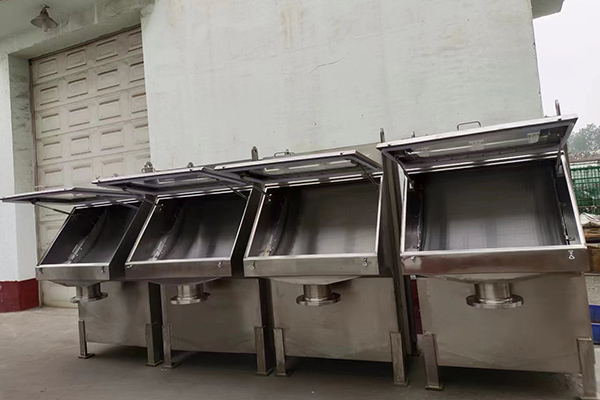
It is evident to everyone that the sieve bend screen brings tangible economic and production benefits to starch production enterprises. As an innovative technology in the industrial screening field, the curved screen will continue to play a significant role in starch screening and other solid-liquid separation fields, expected to become one of the indispensable key equipment in future industrial production.


 What Is a Coal Centrifuge Basket and How Does It Work?
 Engineering Principles Behind Vee Wire Scallops for Catalyst Support Systems
 Tower Internal Wedge Wire Pipe Maintenance and Reliability
 Catalyst Bed Support Grid Design for High Efficiency Reactor Flow
