
Radial flow reactors are widely used in petroleum refining, petrochemical processing, and catalyst-based chemical production because they can handle large process volumes with lower pressure drop than conventional axial-flow reactors. A critical component inside these reactors is the vee wire scallop, which functions as both a flow distribution device and a catalyst retention screen.
By combining high open area, structural strength, and precise slot openings, vee wire scallops help maintain uniform flow through the catalyst bed while protecting valuable catalyst particles from loss. Their performance directly influences reactor efficiency, pressure drop, catalyst utilization, and maintenance requirements.
Vee wire scallops are curved wedge wire screen segments installed vertically along the circumference of a radial flow reactor. Their characteristic D-shaped profile follows the reactor wall and forms part of the catalyst retention and flow collection system.
Manufactured by resistance-welding V-shaped profile wires onto support rods, these screens create continuous slots that allow process fluids to pass while retaining catalyst particles. Depending on reactor design, flow may move from outside-to-inside or inside-to-outside across the catalyst bed.
Unlike perforated plates, vee wire scallops provide significantly higher open area, resulting in lower resistance to fluid flow and improved process efficiency.
In large-diameter reactors, maintaining uniform flow distribution is essential. Uneven flow can create channeling, dead zones, and localized catalyst deactivation, reducing overall reactor performance.
Vee wire scallops help address these challenges by:
Collecting or distributing flow evenly around the reactor circumference
Maintaining consistent velocity through the catalyst bed
Preventing catalyst migration and loss
Supporting catalyst movement in moving-bed applications
By creating a symmetrical radial flow pattern, scallops contribute to more efficient catalyst utilization and stable reactor operation.
Continuous catalytic reforming (CCR) reactors operate at high temperatures and often involve moving catalyst beds. Vee wire scallops provide reliable catalyst retention while allowing catalyst particles to flow smoothly during regeneration cycles.
Hydrotreating units process large volumes of hydrogen-rich gas streams under elevated pressure. Uniform distribution through the catalyst bed is essential for achieving consistent sulfur, nitrogen, and contaminant removal.
Hydrocracking reactors require efficient radial flow distribution to maximize catalyst effectiveness and minimize pressure losses. High-open-area vee wire scallops help maintain stable operating conditions across the entire catalyst bed.
Heavy oil and residue processing units often experience challenging operating conditions, including high temperatures and significant pressure fluctuations. The structural strength of wedge wire scallops makes them suitable for these demanding environments.
Various petrochemical processes use radial flow reactor configurations where reliable catalyst support, retention, and flow management are essential for long-term production efficiency.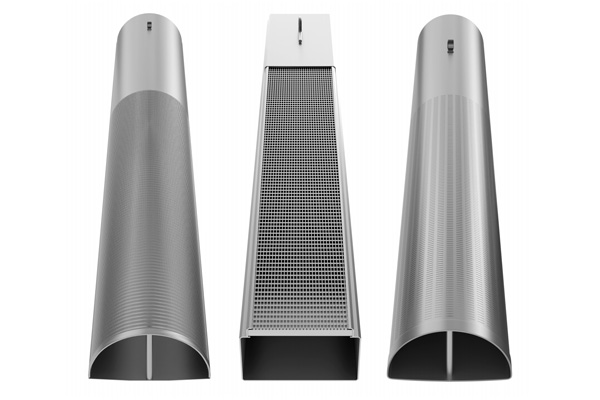
Uniform fluid distribution is one of the most important factors affecting reactor performance. Properly designed scallops help eliminate preferential flow paths and reduce the risk of channeling.
Benefits include:
Higher catalyst utilization
More consistent reaction rates
Improved product quality
Extended catalyst cycle length
Compared with perforated retaining screens, vee wire scallops typically provide substantially greater open area, often ranging from 30% to 70% depending on slot size and wire profile.
This larger flow area reduces hydraulic resistance and can lower overall reactor pressure drop, helping decrease energy consumption and improve throughput.
Precise slot openings retain catalyst particles while minimizing physical contact with the screen surface. Smooth vertical wire profiles reduce catalyst abrasion and help extend catalyst service life.
Selecting the correct slot opening is critical for balancing catalyst retention and flow capacity.
Typical slot sizes range from 0.25 mm to 1.5 mm depending on catalyst dimensions and process requirements.
Important considerations include:
Minimum catalyst particle size
Risk of catalyst fines generation
Desired pressure drop
Required flow capacity
Potential fouling conditions
A properly selected slot size prevents catalyst loss while maintaining efficient fluid passage through the screen.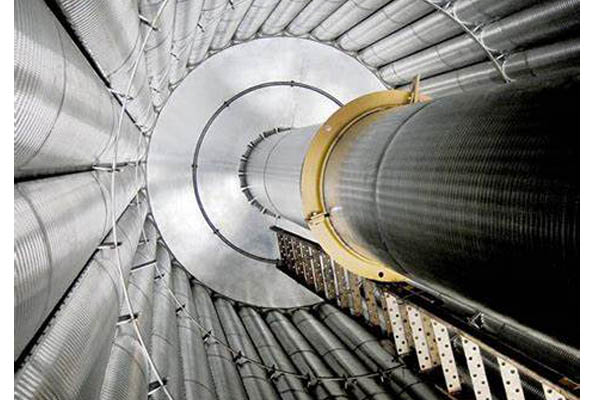
| Feature | Vee Wire Scallops | Perforated Plates |
|---|---|---|
| Open Area | High | Moderate |
| Pressure Drop | Lower | Higher |
| Plugging Resistance | Excellent | Moderate |
| Catalyst Attrition | Low | Higher |
| Maintenance | Easier | More Difficult |
| Flow Distribution | More Uniform | Less Uniform |
Because of these advantages, vee wire scallops are commonly preferred in modern radial flow reactor designs.
Several factors influence scallop performance and service life:
Common materials include:
Stainless Steel 304
Stainless Steel 316L
Duplex Stainless Steel 2205
High-temperature alloys
Nickel-based alloys
Material selection depends on temperature, pressure, corrosion potential, and process chemistry.
Scallops must withstand:
Catalyst loading
Differential pressure
Thermal expansion
Reactor startup and shutdown cycles
The curved geometry of the scallop helps accommodate thermal stresses generated during temperature fluctuations, reducing the likelihood of deformation or fatigue damage.
Under normal refinery and petrochemical operating conditions, vee wire scallops can provide service lives exceeding 5–15 years, depending on material selection and process severity.
Routine inspections typically focus on:
Slot opening integrity
Weld condition
Mechanical deformation
Corrosion or erosion damage
Because scallops are modular components, individual sections can often be replaced without replacing the entire retaining system, reducing maintenance costs and downtime.
Its primary functions are catalyst retention and uniform radial flow distribution within the reactor.
Most applications use slot openings between 0.25 mm and 1.5 mm, depending on catalyst size and process requirements.
They offer higher open area, lower pressure drop, improved anti-clogging performance, and better catalyst protection.
Service life commonly ranges from 5 to 15 years or more, depending on operating conditions and material selection.
Vee wire scallops are essential components in modern radial flow reactor internals. Their ability to combine efficient flow distribution, reliable catalyst retention, low pressure drop, and long-term mechanical durability makes them a preferred solution for catalytic reforming, hydrotreating, hydrocracking, and other petrochemical processes. Proper design of slot size, material selection, and structural configuration ensures optimal reactor performance while maximizing catalyst life and operational efficiency.
 Engineering Principles Behind Vee Wire Scallops for Catalyst Support Systems
 Tower Internal Wedge Wire Pipe Maintenance and Reliability
 Catalyst Bed Support Grid Design for High Efficiency Reactor Flow
 Choosing the Right Vee Wire Scallops for High-Performance Radial Flow Internals
