
Wedge wire filter tubes are widely used in water treatment, petrochemical processing, mining, food production, and industrial filtration systems. Their popularity comes from a unique V-shaped wire profile that creates continuous slots with a high open area. Compared with traditional wire mesh or perforated tubes, this design provides higher flow capacity, lower pressure drop, improved clog resistance, and longer service life.
Understanding how open area influences filtration performance can help engineers select the most efficient filter tube for their application.
Open area refers to the percentage of the screen surface available for fluid to pass through.
A higher open area means more flow channels are available, allowing liquids or gases to move through the filter with less resistance. In wedge wire filter tubes, open area is determined by factors such as:
Slot width
Wire profile shape
Wire spacing
Tube diameter
Depending on the design, wedge wire filter tubes can achieve open areas ranging from 20% to over 45%, significantly higher than many conventional filtration media.
Flow capacity is directly related to the available open area.
As open area increases, fluid velocity through each slot decreases, reducing flow resistance and allowing higher throughput.
| Open Area | Relative Flow Capacity |
|---|---|
| 15% | Low |
| 25% | Moderate |
| 35% | High |
| 45%+ | Very High |
In many industrial applications, a wedge wire filter tube with a high open area can deliver 30–50% greater flow capacity than a comparable perforated tube while maintaining the same filtration function.
This advantage is particularly important in systems requiring high-volume processing and continuous operation.
Pressure drop is one of the most important performance indicators in filtration systems.
When fluid passes through a filter, resistance is created at the filtration surface. A larger open area reduces this resistance by distributing flow across more openings.
Benefits of lower pressure drop include:
Reduced pump energy consumption
Improved system efficiency
More stable operating conditions
Extended equipment life
In high-flow applications, even a small reduction in pressure drop can result in significant energy savings over time.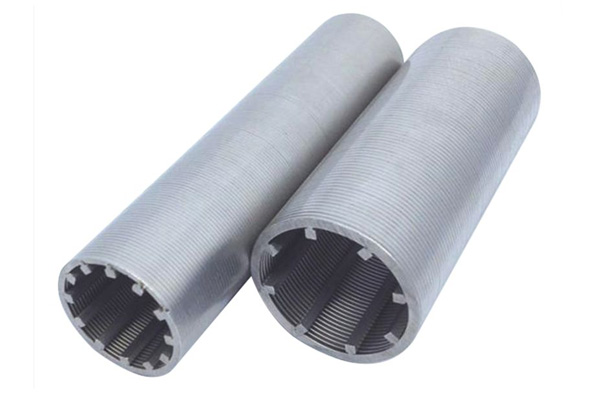
Although increasing slot width generally increases open area, filtration performance requires a balance between flow and particle retention.
Advantages:
Higher filtration accuracy
Better particle retention
Limitations:
Lower open area
Higher pressure drop
Advantages:
Greater flow capacity
Lower pressure drop
Limitations:
Reduced retention of fine particles
Selecting the optimal slot size requires consideration of particle size distribution, process flow requirements, and desired filtration efficiency.
The V-shaped profile wire is what differentiates wedge wire filter tubes from conventional filtration products.
The narrow slot opening is positioned at the filtration surface, while the channel widens beneath the opening. This design creates several advantages:
Higher effective open area
Reduced particle wedging
Improved hydraulic performance
Better self-cleaning characteristics
Particles that pass through the opening continue through a widening channel, reducing the likelihood of blockage within the screen structure.
The advantages of open area become more apparent when comparing filtration technologies.
| Feature | Wedge Wire Tube | Wire Mesh | Perforated Tube |
|---|---|---|---|
| Open Area | High | Medium | Low |
| Pressure Drop | Low | Medium | High |
| Clogging Resistance | Excellent | Moderate | Moderate |
| Structural Strength | High | Medium | High |
| Service Life | Long | Shorter | Medium |
This combination of high flow capacity and durability makes wedge wire filter tubes a preferred choice for demanding industrial environments.
Open area also plays an important role in cleaning efficiency.
During backwashing, re verse flow passes through the screen and removes accumulated solids. The continuous slot design allows cleaning energy to be distributed evenly across the filter surface.
As a result:
Cleaning cycles become more effective
Fouling is reduced
Maintenance frequency decreases
Operating uptime increases
Many facilities use wedge wire filter tubes specifically because they support efficient Clean-In-Place (CIP) and automatic backwash systems.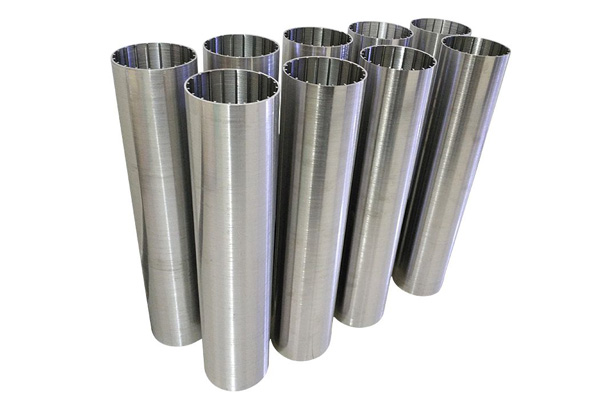
High-open-area wedge wire filter tubes are commonly used in applications where flow efficiency is critical.
High flow capacity helps reduce pumping costs while maintaining filtration performance.
Large open areas minimize pressure losses and protect downstream equipment from resin migration.
Improved drainage and dewatering efficiency increase production throughput.
High-strength designs withstand pressure fluctuations while maintaining reliable flow.
Smooth surfaces and efficient cleaning support sanitary processing requirements.
While wedge wire filter tubes may have a higher initial cost than conventional screens, their open area design often lowers overall operating expenses.
Benefits include:
Reduced energy consumption
Lower pressure drop
Less frequent cleaning
Extended service life
Reduced downtime
These advantages contribute to a lower total cost of ownership and a faster return on investment over the life of the filtration system.
Most wedge wire filter tubes offer open areas between 20% and 45%, depending on slot size and wire profile.
Not always. While higher open area improves flow capacity, slot size must still provide the required filtration accuracy.
Higher open area generally reduces flow resistance, resulting in lower pressure drop and improved energy efficiency.
The V-shaped profile creates a widening slot channel that prevents particles from becoming trapped within the screen.
In many filtration applications, wedge wire tubes provide higher open area, lower pressure drop, better cleaning performance, and longer service life.
The open area design of a wedge wire filter tube is one of its most significant engineering advantages. By maximizing flow capacity while minimizing pressure drop and clogging, wedge wire technology delivers superior filtration efficiency and operational reliability. Whether used in water treatment, mining, petrochemical processing, or industrial filtration systems, a properly designed wedge wire filter tube can improve throughput, reduce maintenance requirements, and lower long-term operating costs.
 Engineering Principles Behind Vee Wire Scallops for Catalyst Support Systems
 Tower Internal Wedge Wire Pipe Maintenance and Reliability
 Catalyst Bed Support Grid Design for High Efficiency Reactor Flow
 Choosing the Right Vee Wire Scallops for High-Performance Radial Flow Internals
