
In industrial processing towers, internal components play a critical role in maintaining stable operation, efficient fluid distribution, and long-term equipment reliability. Although tower internals are often installed inside vessels and operate out of direct view, their performance directly affects process efficiency, pressure stability, and maintenance requirements.
Wedge wire pipe, commonly used in tower internals, provides an effective solution for applications requiring reliable liquid distribution, gas-liquid contact, filtration, and support functions. With a robust welded structure, precise slot openings, and excellent resistance to fouling, wedge wire pipe helps improve tower reliability while reducing maintenance frequency.
For industries such as chemical processing, petrochemical refining, water treatment, and separation systems, selecting the right wedge wire pipe design is essential for achieving stable long-term performance.
Tower internals are designed to control the movement and interaction of fluids inside process equipment. Depending on the application, internal components may be required for:
Liquid distribution
Gas-liquid separation
Filtration
Catalyst or packing support
Collection and drainage
Wedge wire pipes are widely used in these systems because their continuous slot design provides uniform flow distribution while preventing excessive pressure loss.
Unlike conventional perforated pipes, wedge wire pipes are manufactured by welding V-shaped profile wires onto support rods. This creates continuous openings that allow fluids to pass efficiently while retaining particles or supporting internal materials.
One of the biggest challenges for tower internals is fouling caused by suspended solids, deposits, or process contaminants.
Traditional mesh or perforated structures may experience:
Uneven flow distribution
Rapid blockage
Difficult cleaning
Wedge wire pipe uses a V-shaped slot profile that becomes wider toward the inside. This design helps prevent particles from becoming trapped inside the openings and improves cleaning efficiency.
As a result, wedge wire internals can maintain stable flow performance for longer operating periods.
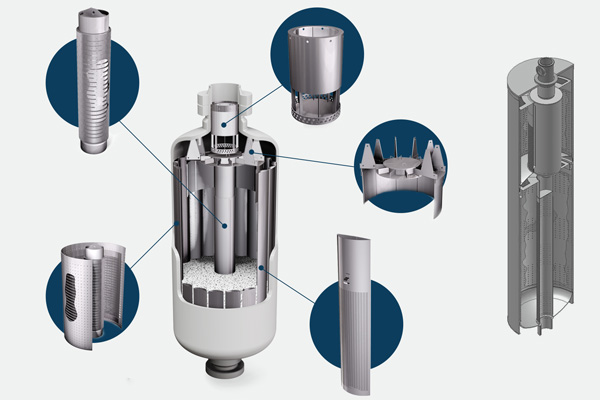
Uniform fluid distribution is essential for many tower applications.
Poor distribution can lead to:
Reduced mass transfer efficiency
Uneven catalyst utilization
Localized pressure differences
Lower process performance
The continuous slot structure of wedge wire pipe provides consistent opening areas along the entire pipe surface, helping distribute liquid or gas more evenly throughout the tower.
This is particularly important in:
Packed towers
Absorption columns
Filtration systems
Reactor internals
Tower internals often operate under demanding conditions involving:
High flow rates
Pressure fluctuations
Temperature variations
Chemical exposure
Wedge wire pipes are manufactured using resistance welding technology, creating strong connections between profile wires and support rods.
This welded structure provides:
High load-bearing capability
Good dimensional stability
Resistance to deformation
Long-term operational reliability
For critical industrial equipment, mechanical durability is an important factor in reducing unexpected maintenance.
The slot opening is one of the most important design parameters for wedge wire pipe.
Incorrect slot sizing may cause:
Reduced filtration performance
Increased pressure drop
Faster fouling
Poor fluid distribution
Proper slot selection should consider:
Particle size
Fluid characteristics
Required retention efficiency
Cleaning method
A well-designed slot configuration improves both operational stability and maintenance performance.
Tower internals are exposed to different operating environments, making material compatibility essential.
Common material options include:
Stainless Steel 304
Stainless Steel 316/316L
Duplex Stainless Steel
Customized corrosion-resistant alloys
Material selection should be based on:
Chemical composition of process fluids
Operating temperature
Corrosion conditions
Expected service life
Choosing the correct material helps prevent premature failure and reduces replacement frequency.
Even high-quality wedge wire pipes require proper engineering design to achieve reliable performance.
Important considerations include:
Pipe diameter
Support structure
Connection method
Installation position
Operating flow conditions
A properly designed tower internal system reduces stress concentration and improves overall equipment reliability.
In packed towers, uniform liquid distribution directly affects mass transfer efficiency.
Wedge wire pipes can be used as distribution or collection components to provide consistent liquid flow across the packing area.
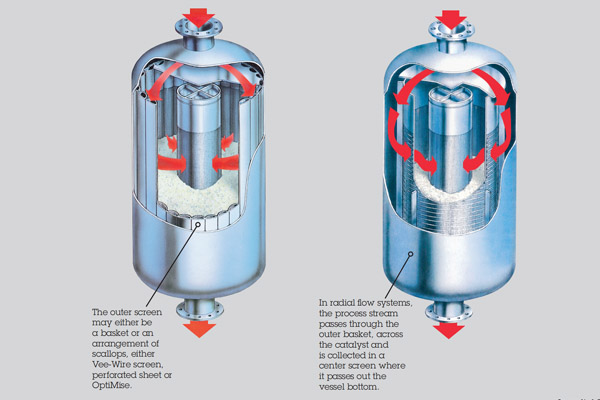
In catalytic processes, internal components must provide reliable support while allowing fluid passage.
Wedge wire pipe offers:
Strong mechanical support
High open area
Good flow characteristics
This helps maintain stable reactor operation.
Wedge wire internal pipes are commonly applied in separation equipment where solids retention and continuous flow are required.
Applications include:
Industrial liquid filtration
Process separation
Water treatment systems
| Feature | Wedge Wire Pipe | Perforated Pipe |
|---|---|---|
| Opening design | Continuous slot | Individual holes |
| Flow distribution | More uniform | Less consistent |
| Fouling resistance | Higher | Lower |
| Cleaning performance | Easier | More difficult |
| Structural strength | High | Depends on plate thickness |
For applications requiring reliable flow control and long service intervals, wedge wire pipe provides significant advantages.
To maximize maintenance efficiency and reliability, industrial operators should consider:
Periodic inspection helps identify:
Wear
Corrosion
Fouling
Mechanical damage
before they affect tower performance.
Cleaning methods should match the application conditions to avoid damaging the slot structure.
Working with an experienced manufacturer helps ensure the wedge wire pipe design matches:
Process requirements
Operating conditions
Maintenance expectations
Tower internal performance directly influences process efficiency, equipment reliability, and maintenance costs. Wedge wire pipe provides a durable and efficient solution for industrial towers requiring stable flow distribution, resistance to fouling, and long-term operation.
With advantages including continuous slot design, high mechanical strength, and customizable configurations, wedge wire pipe helps improve the reliability of tower internals across chemical processing, petrochemical, water treatment, and separation industries.
Selecting the correct wedge wire pipe design is not only a component decision but also an important step toward improving overall process performance and reducing lifecycle maintenance costs.
Wedge wire pipe is used for liquid distribution, collection, filtration, separation, and support applications inside industrial towers and reactors.
Its continuous V-shaped slot design provides better flow distribution, improved fouling resistance, and easier cleaning compared with traditional perforated structures.
Slot size affects filtration efficiency, pressure drop, flow capacity, and maintenance frequency. Proper selection is essential for stable operation.
Common materials include stainless steel 304, 316/316L, duplex stainless steel, and customized alloys depending on corrosion requirements.
 Catalyst Bed Support Grid Design for High Efficiency Reactor Flow
 Choosing the Right Vee Wire Scallops for High-Performance Radial Flow Internals
 Tower Internal Wedge Wire Pipe and Long-Term Performance
 Catalyst Bed Support Grid Structure and Pressure Drop Optimization
