
In fixed-bed reactors, the Catalyst Bed Support Grid is a critical internal component that directly influences catalyst stability, fluid distribution, pressure drop, and overall reactor performance. Although often located beneath the catalyst bed, the support grid plays a fundamental role in maintaining uniform flow, preventing catalyst loss, and ensuring reliable long-term operation.
A well-designed catalyst support grid must withstand heavy catalyst loading, thermal stress, chemical exposure, and continuous fluid flow. Factors such as open area, slot design, mechanical strength, support structure, and material selection determine whether a reactor can achieve efficient mass transfer and stable operation.
For industries such as petrochemical refining, hy drogen production, chemical processing, and gas treatment, optimizing catalyst bed support grid design is essential for maximizing reactor efficiency and reducing operational risks.
A catalyst bed support grid performs several important functions within a fixed-bed reactor:
The primary function is to provide mechanical support for catalyst particles while allowing process fluids to pass through efficiently.
A properly designed grid prevents:
Catalyst migration
Bed movement
Uneven catalyst distribution
Damage to downstream equipment
Fluid distribution inside the reactor directly affects catalyst utilization.
An inefficient support grid may create:
Channeling
Localized high velocity zones
Uneven reaction conditions
Reduced catalyst effectiveness
A high-performance support grid ensures that gases or liquids flow evenly through the catalyst bed, improving contact efficiency and reaction consistency.
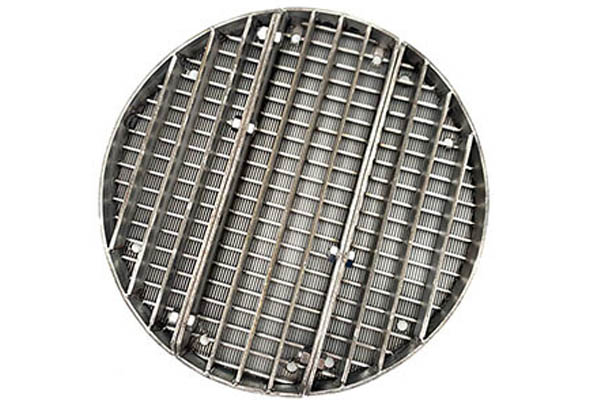
One of the most important design parameters of a catalyst bed support grid is the available open area.
The open area determines how easily fluids can pass through the grid.
A higher open area provides:
Lower pressure drop
Improved flow capacity
More uniform fluid distribution
Reduced energy consumption
However, excessive open area may reduce mechanical strength or allow catalyst particles to migrate.
Therefore, the design must balance:
Hydraulic performance
Catalyst retention
Structural stability
Many modern catalyst support grids utilize wedge wire technology because of its unique V-shaped slot structure.
Compared with perforated plates or conventional mesh designs, wedge wire grids provide:
Continuous slot openings
High mechanical strength
Improved anti-clogging performance
Better flow characteristics
The V-shaped profile prevents particles from becoming trapped inside the opening, helping maintain stable flow during long-term reactor operation.
Catalyst materials can create significant mechanical loads inside a reactor.
The support grid must withstand:
Catalyst weight
Pressure fluctuations
Thermal expansion
Vibration forces
Process cycling conditions
Insufficient mechanical strength may cause:
Grid deformation
Catalyst bed collapse
Flow channel changes
Reactor performance decline
A reliable design requires proper evaluation of:
Support beam arrangement
Grid thickness
Welding quality
Load distribution
A strong support structure ensures the catalyst bed remains stable throughout the operating cycle.
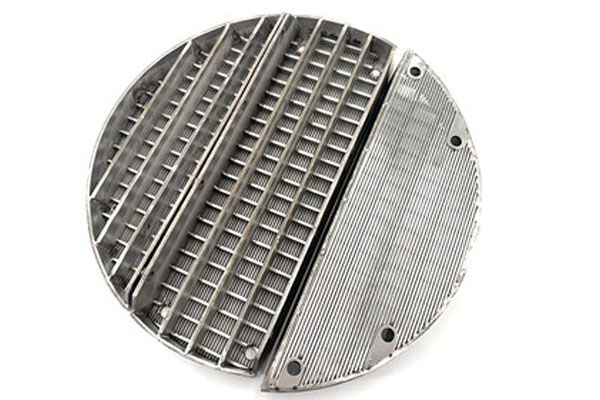
Efficient reactor operation depends on maintaining balanced pressure distribution across the catalyst bed.
Poor grid design can increase pressure losses and create uneven flow patterns.
Key factors affecting pressure drop include:
Slot opening size
Open area percentage
Catalyst particle characteristics
Fluid velocity
Grid geometry
Optimized catalyst support grids minimize unnecessary resistance while maintaining sufficient catalyst retention.
This improves:
Energy efficiency
Reactor throughput
Catalyst utilization
The supporting framework beneath the grid is just as important as the grid surface itself.
Common support structures include:
Reinforcing beams
Support rings
Internal frames
Radial support systems
The design should provide adequate strength without excessively blocking flow paths.
An oversized support structure may reduce effective flow area and increase turbulence.
A properly engineered support system achieves the balance between:
Mechanical reliability
Maximum flow capacity
Easy installation
Catalyst bed support grids operate under demanding environments involving high temperature, pressure, and corrosive chemicals.
Common materials include:
Suitable for general industrial applications with moderate corrosion requirements.
Preferred for:
Chemical reactors
Refining applications
Corrosive process environments
because of improved corrosion resistance.
Used for extreme conditions involving:
High chloride exposure
Severe chemical corrosion
High mechanical stress
Selecting the correct material helps extend service life and reduces reactor maintenance requirements.
During operation, catalyst systems may experience:
Coke formation
Polymer deposits
Fine particle accumulation
These contaminants can reduce flow capacity and increase pressure drop.
A well-designed catalyst support grid should minimize fouling through:
Smooth surface profiles
Proper slot geometry
Effective cleaning compatibility
Wedge wire structures are particularly beneficial because their open slot design reduces particle trapping and supports easier cleaning during maintenance cycles.
Catalyst bed support grids are widely used in:
Petroleum refining reactors
Hydroprocessing units
Hydrogenation reactors
Chemical processing equipment
Gas treatment systems
Fixed-bed catalytic reactors
They provide reliable catalyst support while maintaining efficient fluid movement through the reactor.
A catalyst bed support grid supports catalyst particles, prevents media loss, and ensures uniform fluid distribution through the reactor bed.
Open area affects flow capacity and pressure drop. Proper optimization improves reactor efficiency while maintaining catalyst retention.
Wedge wire provides high strength, continuous slots, low clogging risk, and excellent hydraulic performance compared with traditional designs.
Material selection determines corrosion resistance, temperature capability, and service life under different reactor operating conditions.
The Catalyst Bed Support Grid is a vital reactor internal component that directly affects catalyst performance and process efficiency. A well-engineered design must balance open area, mechanical strength, flow distribution, and material durability.
By optimizing grid geometry, support structure, and material selection, industries can achieve lower pressure drop, improved catalyst utilization, and more reliable reactor operation.
For modern fixed-bed reactors, the catalyst support grid is not simply a mechanical support component—it is an important factor in achieving high-efficiency reactor performance.
 Choosing the Right Vee Wire Scallops for High-Performance Radial Flow Internals
 Tower Internal Wedge Wire Pipe and Long-Term Performance
 Catalyst Bed Support Grid Structure and Pressure Drop Optimization
 What Are Vee Wire Scallops for Radial Flow Internals and How Do They Work?
