
Catalyst support systems play a critical role in maintaining stable reactor performance, especially in fixed-bed reactors used in petrochemical, refining, chemical processing, and environmental applications. The internal components must provide reliable catalyst retention, uniform flow distribution, and sufficient mechanical strength under demanding operating conditions.
Among various reactor internals, Vee Wire Scallops have become an important structural element for supporting catalyst beds and improving fluid distribution. Their unique wedge wire construction combines high open area, excellent strength-to-weight ratio, and precise slot geometry, making them suitable for applications where pressure drop control and catalyst protection are essential.
Understanding the engineering principles behind Vee Wire Scallops helps engineers select the correct design for reactor efficiency, catalyst lifespan, and long-term operational reliability.
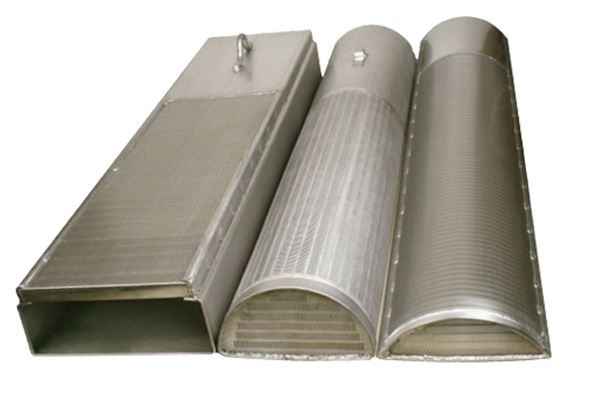
Vee Wire Scallops are curved or segmented wedge wire components typically installed inside reactors as part of catalyst support structures, liquid distributors, or gas-liquid flow management systems.
Unlike conventional perforated plates or mesh supports, Vee Wire Scallops are manufactured by welding specially shaped V-profile wires onto support rods. The V-shaped wire creates continuous slots that gradually widen inward, allowing process fluids to pass through while preventing catalyst particles from escaping.
The main functions of Vee Wire Scallops include:
Supporting catalyst layers within the reactor
Preventing catalyst migration and loss
Improving liquid and gas distribution
Reducing flow resistance
Enhancing mechanical stability under operating loads
Because reactor conditions vary significantly between applications, Vee Wire Scallops are typically customized according to catalyst size, reactor diameter, flow conditions, and process requirements.
One of the most important design considerations for Vee Wire Scallops is the balance between open area and structural strength
The open area determines how easily fluids can pass through the support system. A higher open area generally results in:
Lower pressure drop
Improved fluid distribution
Reduced risk of channeling
Better reactor utilization
The wedge wire profile provides a larger effective flow area compared with traditional drilled plates because the continuous slot design minimizes blockage and allows smoother flow paths.
However, increasing open area without considering mechanical strength can reduce load-bearing capability. Therefore, engineers must optimize:
Slot opening size
Wire profile dimensions
Support rod spacing
Catalyst particle size
Expected operating pressure
A properly designed Vee Wire Scallop maintains sufficient support capacity while maximizing hydraulic performance.
Catalyst retention is one of the primary functions of reactor support components.
If slot openings are too large, catalyst particles may enter the support structure, causing:
Catalyst loss
Pressure drop increase
Uneven catalyst distribution
Difficult catalyst replacement
If the slots are too small, flow resistance increases and may negatively affect reactor performance.
Vee Wire Scallops solve this challenge through precise slot manufacturing. The wedge-shaped wire creates a narrow external opening and a wider internal passage, reducing the possibility of particle bridging and clogging.
Key slot design factors include:
Catalyst particle size distribution
Minimum particle diameter
Required filtration efficiency
Fluid viscosity
Backwashing or regeneration requirements
The goal is to achieve reliable catalyst retention while maintaining efficient fluid movement.
Catalyst support systems must withstand significant mechanical stress throughout reactor operation.
The loads applied to Vee Wire Scallops come from several sources:
Weight of catalyst beds
Pressure differences across the support layer
Thermal expansion and contraction
Mechanical vibration during operation
Catalyst loading and unloading processes
The welded wedge wire structure provides high rigidity because the profile wires and support rods form a strong load-bearing framework.
Compared with conventional wire mesh structures, wedge wire designs offer:
Higher resistance to deformation
Better fatigue performance
More uniform load distribution
Longer service life
Material selection also influences structural performance. Stainless steel grades such as SS304, SS316, and other corrosion-resistant alloys are commonly selected depending on chemical compatibility and operating environment.
Uniform flow distribution is essential for maximizing catalyst efficiency.
Poor distribution can create:
Dead zones
Uneven catalyst utilization
Local overheating
Reduced conversion efficiency
The continuous slot structure of Vee Wire Scallops helps distribute fluids more evenly across the catalyst bed.
The design supports smoother transitions between:
Reactor inlet flow
Catalyst layer
Support structure
Reactor outlet
In applications such as hydroprocessing, adsorption, and catalytic purification systems, improved distribution contributes to more consistent reaction conditions and longer catalyst operating life.
Catalyst reactors often operate under aggressive conditions involving:
High temperature
High pressure
Hydrogen-containing environments
Corrosive chemicals
Reactive process fluids
Therefore, material selection is a critical engineering factor.
Common materials include:
Suitable for general chemical and water-based applications where moderate corrosion resistance is required.
Provides improved corrosion resistance, especially in environments containing chlorides or aggressive chemicals.
Used for more demanding applications requiring higher mechanical strength and corrosion resistance.
Selecting the correct material helps prevent premature failure and reduces reactor maintenance requirements.
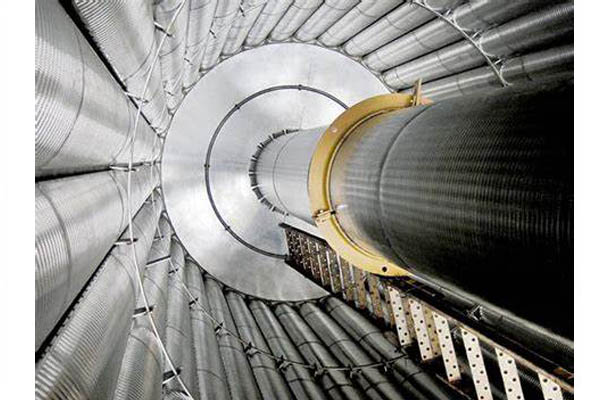
Vee Wire Scallops are widely used in various industrial reactor applications, including:
Hydroprocessing reactors
Fixed-bed catalytic reactors
Adsorption towers
Desulfurization units
Hydrogenation reactors
Chemical processing reactors
Gas purification systems
They are commonly integrated with other reactor internals, such as:
Catalyst support grids
Support beams
Collector systems
Distributor trays
Wedge wire screens
Together, these components create a complete internal system for reliable catalyst operation.
Compared with traditional support structures, Vee Wire Scallops offer several engineering advantages:
The welded wedge wire construction provides strong support for heavy catalyst beds.
The optimized slot structure improves fluid flow efficiency.
The inward-widening slot design reduces particle blockage.
Durable stainless steel construction withstands harsh industrial environments.
Slot sizes, dimensions, materials, and configurations can be adjusted according to reactor requirements.
Vee Wire Scallops are mainly used to support catalyst beds, retain catalyst particles, and improve fluid distribution inside industrial reactors.
The wedge wire structure provides high strength, large open area, and better resistance to clogging compared with conventional perforated plates or mesh screens.
Slot size depends on catalyst particle size, required retention performance, fluid characteristics, and reactor operating conditions.
Stainless steel materials such as SS304 and SS316L are widely used. For highly corrosive environments, duplex stainless steel or specialized alloys may be selected.
The engineering performance of Vee Wire Scallops depends on careful optimization of hydraulic efficiency, catalyst retention, mechanical strength, and material durability. Their wedge wire construction provides an effective solution for modern catalyst support systems where reliable operation and long service life are required.
By selecting the appropriate slot design, material, and structural configuration, Vee Wire Scallops can help improve reactor performance, reduce maintenance requirements, and maximize catalyst utilization in demanding industrial processes.
 What Is a Coal Centrifuge Basket and How Does It Work?
 Tower Internal Wedge Wire Pipe Maintenance and Reliability
 Catalyst Bed Support Grid Design for High Efficiency Reactor Flow
 Choosing the Right Vee Wire Scallops for High-Performance Radial Flow Internals
