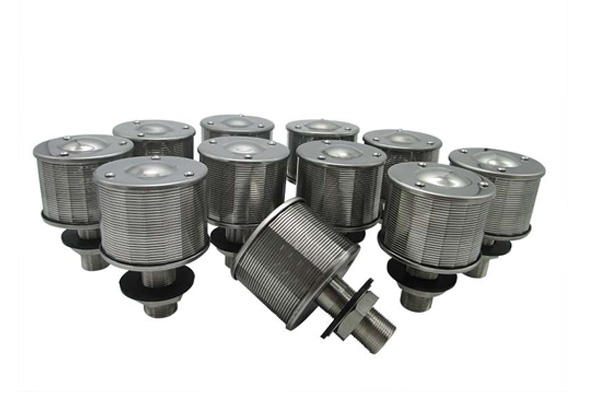
Custom stainless steel wedge wire filter nozzles are widely used in water treatment, petrochemical processing, food production, and industrial filtration systems. Their performance depends heavily on how well the design matches the actual operating conditions.
To ensure reliable filtration, low pressure drop, and long service life, it is essential to provide clear and complete technical information during the design stage.
1. Slot Size and Filtration Precision
Slot size is the most critical parameter in nozzle design. It determines the filtration accuracy and defines the smallest particles that will be retained.
Smaller slots improve filtration precision but may increase clogging risk
Larger slots allow higher flow rates but may compromise media retention
The correct slot size should always be s elected based on particle size or filter media characteristics.
2. Overall Dimensions
Accurate dimensions ensure compatibility with the system and sufficient filtration area.
Key dimensional parameters include:
Screen Outside Diameter (OD): Commonly around 2 inches, but fully customizable
Screen Height (Effective Length): Determines the active filtration area
Total Length: Includes both the screen section and connection (e.g., threaded nipple)
Proper sizing directly impacts flow capacity and pressure performance.
3. Material Selection
Material choice affects corrosion resistance, mechanical strength, and service life.
Common material options:
Stainless Steel 304: Cost-effective for general applications
Stainless Steel 316L: Enhanced corrosion resistance, suitable for harsh environments
Duplex Stainless Steel: Higher strength and improved resistance to stress corrosion
Hastelloy: Ideal for highly aggressive chemical conditions
Material selection should always match the chemical composition and temperature of the operating environment.
4. Connection Type
The connection method ensures secure installation and system compatibility.
Common options include:
Threaded connections: NPT
BSPT / BSPP
Metric (M thread)
Flange or welded connections: For heavy-duty or custom installations
Selecting the correct connection type prevents leakage and simplifies installation and maintenance.
5. Design Features and Structural Options
Additional design elements can enhance performance in demanding applications:
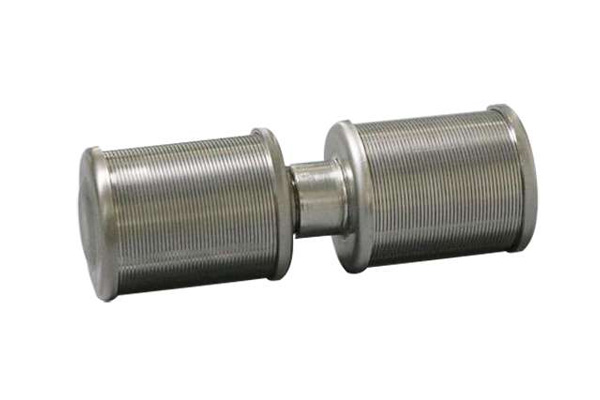
Single-head or double-head configurations
Inner perforated support pipe for high-pressure resistance
Custom gaskets and nuts for sealing and fixation
These features are particularly important in systems with high flow rates or mechanical stress.
6. Operational and Application Details
Providing real operating conditions is essential for accurate engineering.
Required information:
Flow direction: In-to-out /Out-to-in
Operating pressure and temperature
Filtration type: Liquid-solid or gas-solid separation
Cleaning method: Backwashing or other techniques
These factors influence both structural design and material selection.
7. Optional Data That Improves Design Accuracy
While not always mandatory, the following details can significantly enhance design precision:
Flow rate: Helps optimize open area and reduce pressure drop
Media type: Such as sand, activated carbon, or ion exchange resin
Providing this data allows for better alignment between nozzle performance and system requirements.
Best Practices for Efficient Customization
To streamline the design process and reduce lead time:
Share detailed drawings or installation layouts when available
Provide actual operating data instead of estimated values
Consider maintenance access and long-term operation
Confirm compatibility with existing systems before production
A collaborative approach between the user and manufacturer leads to better outcomes.
By providing accurate and structured information upfront, you can ensure optimal performance, extended service life, and reduced operational risk.
At YUBO Filtration, we offer high-quality stainless steel filter nozzles designed to meet your filtration needs. Reach out to learn more about how these essential components can improve your filtration system.
FAQ: Custom Filter Nozzle Design
1. How do I balance filtration accuracy and flow rate?
A smaller slot size improves precision but may reduce flow and increase clogging. The optimal balance depends on particle size distribution and system capacity requirements.
2. Are wedge wire nozzles suitable for high-temperature applications?
Yes, especially when using materials like 316L or higher-grade alloys. Always confirm the maximum operating temperature during design.
3. What is the typical lifespan of a stainless steel filter nozzle?
Service life varies by application, but properly sel ected stainless steel nozzles can last several years with minimal maintenance.
4. Can I replace plastic nozzles with stainless steel ones?
In most cases, yes. However, connection compatibility and system pressure conditions must be verified before replacement.
5. How can I shorten the customization lead time?
Providing complete technical specifications, drawings, and clear application details at the initial stage helps reduce back-and-forth communication and speeds up production.

 Engineering Principles Behind Vee Wire Scallops for Catalyst Support Systems
 Tower Internal Wedge Wire Pipe Maintenance and Reliability
 Catalyst Bed Support Grid Design for High Efficiency Reactor Flow
 Choosing the Right Vee Wire Scallops for High-Performance Radial Flow Internals
