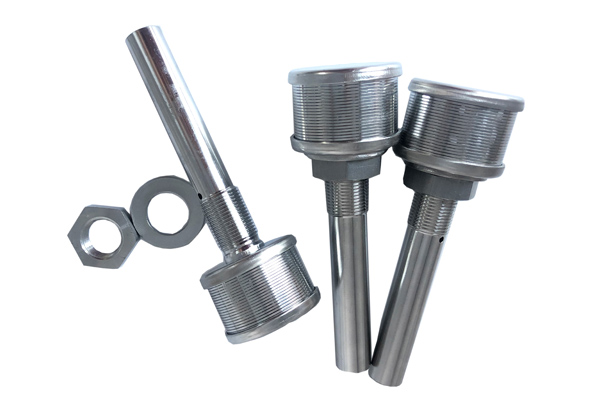
Stainless steel wedge wire filter nozzles are widely used in water treatment, petrochemical processing, and food production systems. Their precision slot openings, high mechanical strength, and anti-clogging design make them a preferred choice for demanding filtration environments.
1. What Slot Size Should I Choose to Prevent Clogging?
Selecting the correct slot size is critical for filtration performance and system stability. Slot openings typically range from 0.02 mm to 10 mm, depending on the application.
Expert Analysis:
The slot size should be smaller than the smallest particle size of the filter media you need to retain.
For example: Fine sand: smaller slot openings (e.g., 0.2–0.5 mm)
Ion exchange resin: precise micro-slots to prevent bead loss
Why Wedge Wire Works:
The V-shaped profile creates slots that widen inward. This allows particles that pass the outer opening to move through freely, reducing the risk of blockage and maintaining continuous flow.
2. Can Wedge Wire Nozzles Be Customized for Specific Systems?
Yes—customization is not only possible but often necessary for optimal performance.
Typical Custom Options Include:
Slot size: tailored to media and filtration requirements
Thread type: M, NPT, BSPP (G), PT
Handle length: for header lateral systems or deep vessels
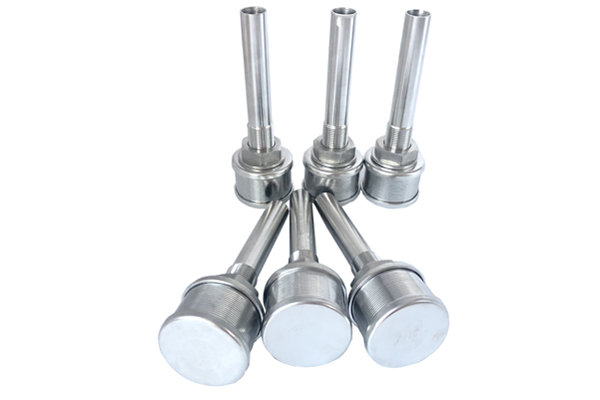
Design types: single-head, double-head, long-handle
Expert Analysis:
Custom-designed nozzles ensure compatibility with your filtration system, reducing installation issues and improving long-term efficiency.
3. Which Stainless Steel Grade is Best for My Application?
Material selection directly affects durability, corrosion resistance, and lifecycle cost.
Common Options:
SS304: suitable for general water treatment and food-grade applications
SS316L: higher resistance to corrosion, ideal for seawater or chemical exposure
Duplex steel / Hastelloy: designed for highly aggressive or extreme environments
Expert Analysis:
Choosing a higher-grade material may increase upfront cost but significantly reduces maintenance and replacement frequency over time.
4. How Do Stainless Steel Nozzles Improve System Performance Compared to Plastic?
Stainless steel wedge wire nozzles outperform plastic alternatives in several key areas.
Performance Advantages:
Higher flow rates: due to larger open area
Lower pressure drop (dP): reduces energy consumption
Improved backwash efficiency: ensures uniform water distribution
Longer service life: often exceeding 10 years
Expert Analysis:
For industrial systems with continuous operation or high load conditions, stainless steel provides a more stable and cost-effective long-term solution.
5. What Are the Typical Installation and Maintenance Procedures?
Proper installation and maintenance ensure optimal nozzle performance and system longevity.
Installation Guidelines:
Mounted on lateral pipes or tube sheets in filter vessels
Secured using nuts, washers, or rubber gaskets
Use PTFE (Teflon) tape or insulating gaskets to prevent galvanic corrosion
Maintenance Practices:
Regular backwashing to remove accumulated particles
Minimal manual cleaning due to smooth, anti-clogging surface
Expert Analysis:
Correct installation reduces leakage risks and ensures uniform flow distribution across the filter bed.
Choosing the right wedge wire filter nozzle involves balancing slot size, material grade, customization, and system requirements. By understanding these key factors, buyers can improve filtration efficiency, reduce maintenance costs, and extend system lifespan.
For industrial filtration systems, informed selection is not just a technical decision—it directly impacts operational reliability and long-term performance.
FAQ: Additional Questions Buyers Often Ask
1. How do I know if my filter nozzles need replacement?
Signs include uneven flow distribution, increased pressure drop, media leakage, or visible wear and corrosion.
2. Are wedge wire nozzles suitable for high-temperature applications?
Yes. Stainless steel nozzles can withstand significantly higher temperatures than plastic, making them suitable for demanding industrial environments.
3. Can filter nozzles handle abrasive media?
Yes, especially when made from high-grade materials like SS316L or duplex steel, which offer enhanced wear resistance.
4. What is the typical lifespan of stainless steel filter nozzles?
Depending on operating conditions, they typically last 5–15 years, significantly longer than plastic alternatives.
5. Do I need professional support for nozzle selection?
For complex systems or critical applications, consulting with experienced manufacturers or engineers is recommended to ensure proper sizing and configuration.

 Engineering Principles Behind Vee Wire Scallops for Catalyst Support Systems
 Tower Internal Wedge Wire Pipe Maintenance and Reliability
 Catalyst Bed Support Grid Design for High Efficiency Reactor Flow
 Choosing the Right Vee Wire Scallops for High-Performance Radial Flow Internals
