Stainless Steel Filter Nozzle Price Guide: What Affects Cost?
When it comes to purchasing stainless steel filter nozzles, there are several factors that influence their pricing. Understanding these key drivers is crucial for making an informed decision, whether you're sourcing nozzles for industrial applications or precision filtration in specializ ed environments.
Key Cost Drivers
1.Material Grade
The material used to manufacture stainless steel filter nozzles plays a pivotal role in determining their price. Higher-grade materials offer better corrosion resistance, durability, and longevity, but they come at a premium cost.
For example:
Standard Materials: The most affordable stainless steel options, often used in non-corrosive environments such as food and beverage processing, tend to be less expensive. These materials offer a balance between cost and performance.
Corrosion-Resistant Materials: Materials such as SS316 and SS316L, which contain higher amounts of molybdenum, are more resistant to corrosion and are commonly used in marine, chemical, and pharmaceutical applications. As expected, these materials cost more due to their enhanced durability.
High-End Alloys: For extreme environments, such as offshore oil rigs or high-salinity marine settings, materials like duplex steel are used. These materials are much more expensive, but they offer superior resistance to corrosion and can last much longer than standard stainless steels.
2.Design Complexity
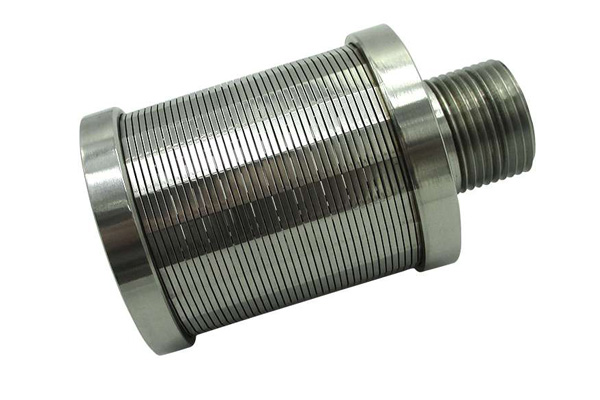
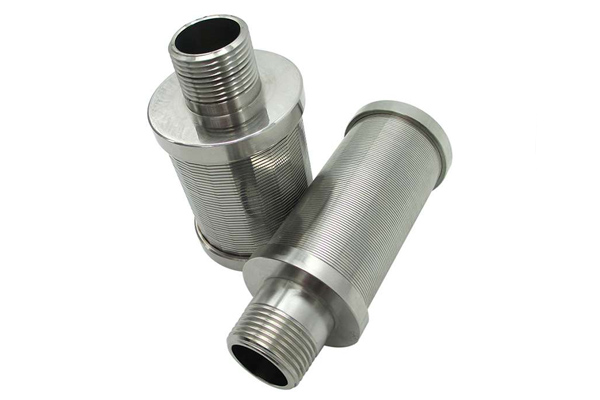
The design and functionality of the filter nozzle also contribute significantly to its cost. Basic nozzles, which are simple cylindrical shapes or standard wedge wire models, are more affordable. However, more complex designs that include features like:
Multi-layer filtration
Self-cleaning mechanisms
Backflushing capabilities
These additional features improve the nozzle's performance in challenging filtration environments but increase the overall cost.
3.Filtration Rating (Micron Size)
Finer filtration ratings require precise manufacturing processes and better materials to ensure the nozzle can filter particles down to the micron or even nanometer level. As the required filtration becomes finer, the manufacturing process becomes more complex, and the cost rises accordingly.
4.Size and Connection Type
Larger filter nozzles demand more raw materials and extended manufacturing time, which increases their cost. Additionally, the type of connection used (e.g., NPT, BSP, or custom flanged) can also impact the price. Specializ ed connections typically require more machining and can add to the overall cost.
5.Order Quantity
Purchasing stainless steel filter nozzles in bulk often leads to a reduction in unit price. Many suppliers offer discounts for larger orders, which is particularly beneficial for industries requiring a high volume of nozzles. The more nozzles you purchase, the lower the cost per unit, which can be a cost-effective option for large-scale operations.
Get a Free Quote for Stainless Steel Filter Nozzles
Material Comparison: How Material Affects Cost
| Material Grade |
Approximate Cost |
Best Use Case |
| Standard Steel |
Lower cost |
Non-corrosive environments (e.g., food processing) |
| SS316 / SS316L |
Moderate cost |
Marine, coastal, and chemical applications |
| Duplex Steel |
Higher cost |
Extreme corrosion environments (e.g., offshore oil) |
Why Material Selection Matters
Choosing the right material is crucial for ensuring that your stainless steel filter nozzles perform effectively in the intended environment. While materials like SS304 are adequate for general use in indoor, non-corrosive applications, environments exposed to harsh chemicals, saltwater, or high temperatures may require the added durability of SS316 or even duplex steels. Selecting the appropriate material helps avoid premature wear and ensures that the nozzles will continue to perform optimally over time.
FAQ: Common Questions About Stainless Steel Filter Nozzles
1. How do I know which material grade is best for my application?
The material grade depends on the environment the filter nozzle will be exposed to. For non-corrosive or light-duty applications, standard materials like SS304 are sufficient. For marine or chemical environments, SS316 or SS316L may be more appropriate. For harsh environments, duplex steel provides the highest level of corrosion resistance.
2. Are nozzles with advanced features worth the additional cost?
Yes, if your application requires continuous operation or is exposed to challenging conditions, nozzles with self-cleaning mechanisms or multi-layer filtration can offer significant performance improvements. These features help reduce maintenance downtime and increase efficiency.
3. How does the filtration rating affect the cost?
Nozzles with finer filtration capabilities require more precise manufacturing and better-quality materials to maintain consistent performance. This results in higher costs, but the added expense is necessary for applications that demand very high filtration efficiency.
4. Can I reduce costs by purchasing in bulk?
Yes, buying stainless steel filter nozzles in bulk typically reduces the cost per unit. Many suppliers offer bulk discounts, making this a cost-effective option for industries that need a large number of nozzles for ongoing operations.

 Engineering Principles Behind Vee Wire Scallops for Catalyst Support Systems
 Tower Internal Wedge Wire Pipe Maintenance and Reliability
 Catalyst Bed Support Grid Design for High Efficiency Reactor Flow
 Choosing the Right Vee Wire Scallops for High-Performance Radial Flow Internals
