Filter Nozzle Use in Wastewater Treatment Plants
Stainless steel wedge wire filter nozzles play a critical role in modern wastewater treatment systems. Designed for durability, precision, and long-term performance, these components support efficient solid-liquid separation while protecting filtration media. Their application spans municipal facilities and industrial plants where reliability and consistent flow distribution are essential.
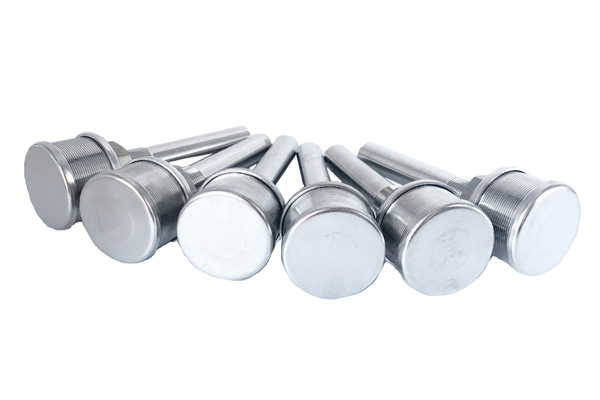
Wedge wire filter nozzles are filtration components manufactured from V-shaped stainless steel profile wires welded onto support rods. This structure creates continuous slot openings that allow fluid to pass while retaining solid particles or filter media.
Unlike perforated or mesh-based designs, the wedge wire structure minimizes clogging and maintains stable flow rates over time. The precision of slot openings ensures accurate filtration performance across a wide range of applications.
Role in Wastewater Treatment Plants
In wastewater treatment systems, filter nozzles serve two primary functions:
Media retention – Preventing the loss of sand, activated carbon, or resin
Flow distribution – Ensuring even movement of water or air during filtration and backwashing
These dual functions are essential for maintaining filtration efficiency and extending system lifespan.
Key Applications
1. Sand Filtration Systems
Filter nozzles are installed at the base of sand filters to retain media while allowing treated water to pass through. They are widely used in tertiary treatment, where fine particle removal is required to meet discharge standards.
2. Activated Carbon Filters
In carbon filtration units, nozzles hold activated carbon in place during adsorption processes. Their corrosion resistance makes them suitable for removing organic compounds and residual chemicals.
3. Ion Exchange Systems
Ion exchange processes rely on resin beads for softening or demineralization. Filter nozzles prevent resin loss during operation and backwashing, ensuring consistent treatment performance.
4. Water and Air Distribution Systems
Filter nozzles also function as distribution and collection elements. They evenly distribute backwash water or air, improving cleaning efficiency and preventing dead zones within the filter bed.
 Key Advantages
Anti-Clogging Performance
The V-shaped wire profile forms outward-widening slots, reducing the risk of particle blockage. This design maintains a high open area and stable flow even under heavy loading conditions.
High Mechanical Strength
Manufactured from stainless steel, these nozzles can withstand high pressure, vibration, and frequent backwashing cycles. This makes them suitable for continuous industrial operation.
Corrosion Resistance
Materials such as SS304 and SS316L provide excellent resistance to chemical corrosion, making the nozzles ideal for aggressive wastewater environments, including those with high salinity or chemical content.
Flexible Customization
Filter nozzles can be tailored to meet specific system requirements, including:
Slot sizes for different media types
Thread standards such as NPT or BSPT
Single-head or double-head configurations
Various lengths and connection styles
Installation and System Integration
Filter floor systems – Evenly spaced across the base of filtration tanks
Lateral pipe systems – Attached to distribution pipes for targeted flow control
Proper installation ensures uniform filtration, effective backwashing, and reduced maintenance frequency.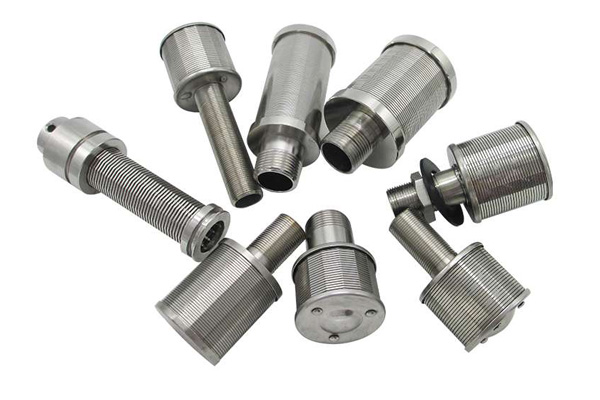
Why They Matter in Modern Treatment Systems
Wastewater treatment plants face increasing demands for efficiency, reliability, and regulatory compliance. Filtration components must operate continuously under variable conditions without compromising performance.
Wedge wire filter nozzles address these challenges by offering:
Long service life
Consistent hydraulic performance
Reduced downtime and maintenance costs
Their ability to maintain stable operation directly contributes to overall plant efficiency and water quality outcomes.
FAQ setion
1. How do I choose the correct slot size for a filter nozzle?
The slot size should typically be 50–70% of the smallest media particle size. This ensures proper retention while maintaining adequate flow.
2. What is the difference between single-head and double-head nozzles?
Single-head nozzles are used for standard filtration setups, while double-head designs provide enhanced stability and are often used in deeper or high-load filter beds.
3. How often do stainless steel filter nozzles need replacement?
Under normal operating conditions, high-quality stainless steel nozzles can last several years. Replacement depends on wear, corrosion exposure, and maintenance practices.
4. Can filter nozzles be used in high-temperature environments?
Yes, stainless steel wedge wire nozzles can withstand elevated temperatures, making them suitable for certain industrial processes, provided material selection matches the conditions.
5. What are common signs of nozzle failure?
Indicators include uneven flow distribution, media leakage, reduced filtration efficiency, or increased pressure drop within the system.
By integrating durable materials with precise engineering, stainless steel wedge wire filter nozzles remain a reliable solution for wastewater treatment plants seeking long-term performance and operational stability.

 What Is a Coal Centrifuge Basket and How Does It Work?
 Engineering Principles Behind Vee Wire Scallops for Catalyst Support Systems
 Tower Internal Wedge Wire Pipe Maintenance and Reliability
 Catalyst Bed Support Grid Design for High Efficiency Reactor Flow
