Underdrain Nozzle Systems: Design Principles and Best Practices
Efficient water filtration depends not only on filter media but also on the performance of the underdrain system beneath it. Stainless steel underdrain nozzle systems play a critical role in ensuring uniform flow distribution, effective backwashing, and long-term operational reliability.
What Is an Underdrain Nozzle System?
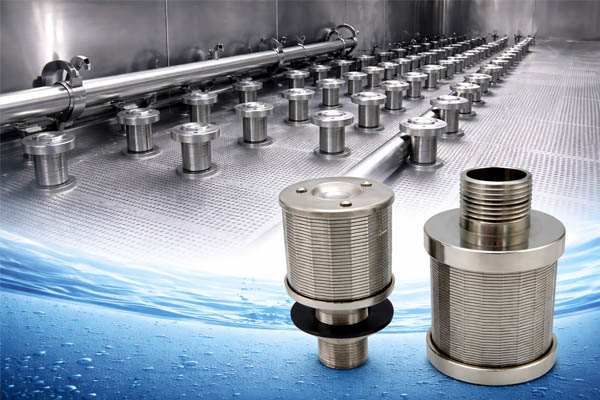
An underdrain nozzle system is installed at the base of a filtration tank.
Its primary functions are:
Evenly distributing filtered water during service cycles
Delivering uniform air and water during backwash
Retaining filter media such as sand, anthracite, or activated carbon
Modern systems increasingly use stainless steel (typically SS304 or SS316) due to their superior mechanical strength, corrosion resistance, and long service life—often exceeding several decades in demanding environments.
Why Stainless Steel Over Plastic?
While plastic nozzles are widely used, stainless steel alternatives offer significant long-term advantages:
Higher structural strength: Suitable for high-pressure and high-rate filtration systems
Enhanced chemical resistance: Performs reliably in aggressive water chemistries
Longer lifespan: Reduced replacement frequency lowers lifecycle costs
Operational stability: Less prone to deformation or breakage during backwash
These characteristics make stainless steel particularly suitable for municipal water treatment plants, industrial filtration systems, and retrofit projects.
Key Design Principles
A well-designed underdrain system is based on hydraulic balance and mechanical reliability. The following principles are essential:
1. Uniform Flow Distribution
Each nozzle must create a controlled pressure drop to ensure even distribution across the filter bed. Poor distribution can lead to channeling, reduced filtration efficiency, and uneven media wear.
2. Air Scour Efficiency
For systems using combined air and water backwashing, nozzles must support consistent air delivery.
Specialized tailpipe designs with calibrated openings help form a uniform air layer, improving cleaning efficiency and preventing dead zones.
3. Accurate Slot Sizing
Slot openings are typically se lected based on the effective size of the filter media.
Common ranges (e.g., 0.25–0.5 mm) ensure: Reliable media retention
Minimal risk of clogging
Stable filtration performance
4. Low Profile Design
Low-profile underdrain systems maximize the available depth for filter media, which directly enhances filtration capacity and run time.
5. Optimized Nozzle Density
High nozzle density improves backwash uniformity. Engineering designs often balance:
Flow rate requirements
Tank dimensions
Media characteristics
Types of Stainless Steel Nozzles
Different applications require different nozzle configurations. Common types include:
Mushroom (Dome) Nozzles
These are widely used in standard filtration systems. Their slotted dome structure allows even water distribution, while the stem supports air delivery.
Manufactured using V-shaped wire profiles, these nozzles offer:
Non-clogging performance
Precise slot control
High mechanical strength
They are often used in advanced filtration systems and can eliminate the need for gravel support layers.
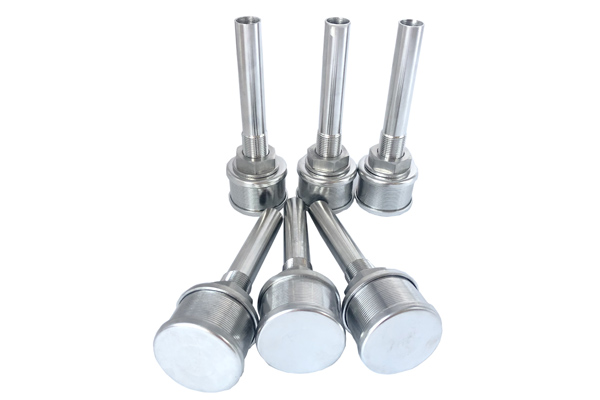
Long Handle Nozzles
Designed with extended tailpipes, these nozzles improve air-water separation and enhance backwash efficiency in deeper plenum systems.
Best Practices for Installation
Proper installation is essential to ensure system performance and longevity.
Foundation Preparation
Ensure a clean, level, and structurally sound filter floor
Maintain strict flatness tolerances to prevent uneven flow
Nozzle Installation
Secure all nozzles firmly and maintain vertical alignment
Use top-side installation methods where possible to improve efficiency
Gasket and Sealing
Use high-quality gaskets, especially in air scour systems
Prevent air leakage that could disrupt backwash performance
Leak Testing
Before loading media:
Fill the system with water
Check for leaks in the plenum and nozzle connections
Media Loading
Add media in layers, starting with the coarsest
Avoid dropping heavy materials directly onto nozzles
Operation and Maintenance Considerations
Even well-designed systems require proper operation and routine checks.
Airflow Control
Maintain consistent airflow rates. Improper air distribution can reduce cleaning efficiency and damage the media bed.
Routine Inspection
Inspect nozzles periodically for:
Blockage from scaling (iron, manganese)
Mechanical wear or damage
Upgrade Strategy
Facilities using plastic nozzles may benefit from upgrading to stainless steel systems to reduce downtime and maintenance costs.
Practical Applications
Municipal drinking water treatment
Industrial process water filtration
Desalination pretreatment systems
Activated carbon and multimedia filters
Their reliability and adaptability make them a preferred choice in both new installations and retrofit projects.
At YUBO Filtration, we offer high-quality stainless steel filter nozzles designed to meet your filtration needs. Reach out to learn more about how these essential components can improve your filtration system.
WhatsApp: 86-13653285589
FAQ: Common Questions from Engineers and Operators
1. How do I select the right nozzle slot size for my filter media?
Slot size should typically be smaller than the smallest effective media size. A common guideline is selecting slots at 50–70% of the smallest media particle diameter to ensure proper retention without clogging.
2. Can stainless steel nozzles be used in existing filter retrofits?
Yes. Many stainless steel systems are designed for retrofit applications, especially low-profile configurations that increase media depth without major structural changes.
3. What causes uneven backwashing in nozzle systems?
Common causes include inconsistent airflow, incorrect nozzle spacing, or improper installation. Ensuring uniform pressure distribution and correct nozzle density is key.
4. How often should nozzle systems be inspected?
Routine inspections are typically conducted during scheduled maintenance shutdowns. However, systems treating high iron or manganese water may require more frequent checks.
5. Are wedge wire nozzles better than traditional designs?
Wedge wire nozzles offer advantages such as anti-clogging performance and precise slot control. However, the best choice depends on the specific filtration process and system requirements.

 What Is a Coal Centrifuge Basket and How Does It Work?
 Engineering Principles Behind Vee Wire Scallops for Catalyst Support Systems
 Tower Internal Wedge Wire Pipe Maintenance and Reliability
 Catalyst Bed Support Grid Design for High Efficiency Reactor Flow
