In industrial towers, reactors, and separation equipment, internal components play a critical role in maintaining efficient fluid distribution, stable operation, and long-term process reliability. Among these components, tower internal wedge wire pipes are widely used in applications requiring precise flow control, particle retention, and durable performance under demanding conditions.
Unlike conventional perforated pipes or mesh structures, wedge wire pipes are designed with continuous V-shaped slots that provide high open area, low pressure drop, and excellent resistance to clogging. These characteristics make them suitable for long-term operation in industries such as petrochemical processing, water treatment, chemical production, and catalyst systems.
However, achieving reliable long-term performance requires more than simply selecting a wedge wire pipe. Factors including slot design, material compatibility, hydraulic performance, manufacturing quality, and operating environment all influence service life and efficiency.
What Is a Tower Internal Wedge Wire Pipe?
A tower internal wedge wire pipe is a specially designed tubular component installed inside industrial towers, reactors, and filtration systems to distribute fluids or retain solid media.
The pipe is manufactured by welding V-shaped profile wires onto longitudinal support rods. This creates continuous openings along the pipe surface, allowing fluids to pass through while controlling the movement of particles or filter media.
Typical applications include:
- Reactor internal distributors
- Catalyst support systems
- Ion exchange equipment
- Absorption towers
- Water treatment vessels
- Gas-liquid contact systems
Compared with traditional drilled pipes, wedge wire pipes offer:
- Higher open area
- More uniform flow distribution
- Better anti-clogging performance
- Higher mechanical strength
- Longer operating life
Why Long-Term Performance Matters in Tower Internals
Industrial towers often operate continuously for months or even years. Failure of internal components can result in:
- Uneven fluid distribution
- Reduced process efficiency
- Increased pressure drop
- Production interruptions
- Costly maintenance
Therefore, tower internal components must maintain stable performance under:
- Continuous fluid impact
- Chemical exposure
- Temperature changes
- Pressure fluctuations
- Mechanical stress
A properly designed wedge wire pipe helps ensure consistent operation throughout the equipment lifecycle.
1. High Open Area Improves Hydraulic Performance
One of the most important advantages of wedge wire pipes is their high open area.
The continuous slot structure allows fluids to enter or exit smoothly, reducing resistance compared with conventional perforated designs.
Higher open area provides several benefits:
Improved Flow Distribution
Uniform fluid distribution is essential in towers and reactors. Poor distribution can create:
- Channeling
- Dead zones
- Uneven reaction conditions
Wedge wire pipes help maintain balanced flow across the entire surface.
Reduced Pressure Drop
Lower resistance reduces:
- Pump energy consumption
- Operating costs
- Hydraulic instability
For large-scale industrial systems, even small improvements in pressure drop can create significant long-term savings.
2. Slot Design Determines Filtration and Distribution Efficiency
Slot opening is one of the key parameters affecting wedge wire pipe performance.
The correct slot size must balance:
- Flow capacity
- Particle retention
- Fouling resistance
- Cleaning requirements
A smaller slot opening provides better particle control but may increase resistance.
A larger slot opening improves flow capacity but may reduce retention efficiency.
Engineers typically consider:
- Particle size distribution
- Catalyst or resin particle diameter
- Fluid viscosity
- Solid concentration
- Required filtration accuracy
Proper slot selection ensures both efficient operation and long service life.
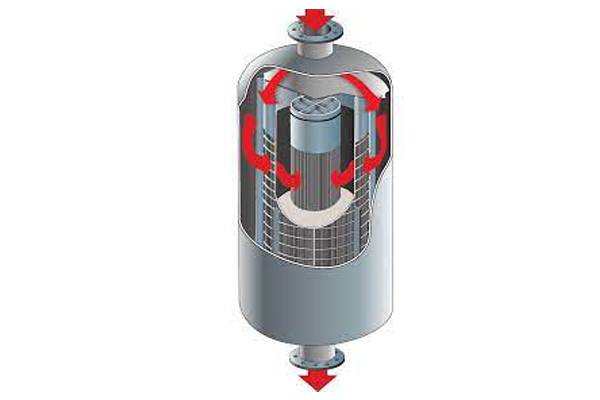
3. V-Shaped Slots Reduce Clogging and Fouling
The unique V-shaped slot geometry is a major reason wedge wire pipes achieve long-term reliability.
The slot opening becomes wider toward the inside of the pipe, preventing particles from becoming trapped.
This design helps:
- Reduce blockage
- Maintain stable flow
- Improve cleaning efficiency
- Extend maintenance intervals
Compared with traditional screens or perforated pipes, wedge wire structures are less likely to experience rapid fouling.
This is especially important in applications involving:
- Suspended solids
- Catalyst particles
- Resin media
- Process contaminants
4. Material Selection Directly Affects Service Life
Tower internals often operate in aggressive environments where material selection is critical.
Common materials include:
| Material |
Typical Applications |
| Stainless Steel 304 |
General industrial applications |
| Stainless Steel 316L |
Chemical and water treatment systems |
| Duplex Stainless Steel |
High chloride environments |
| Nickel Alloys |
Highly corrosive processes |
The correct material choice improves resistance against:
- Corrosion
- Chemical attack
- Thermal stress
- Mechanical degradation
For long-term operation, material compatibility should always be evaluated based on actual process conditions.
5. Manufacturing Quality Ensures Structural Reliability
Even with the correct material and design, manufacturing quality determines actual performance.
High-quality wedge wire pipes are typically produced using precision resistance welding technology.
Important manufacturing factors include:
Accurate Slot Dimensions
Consistent slot openings ensure predictable flow performance.
Strong Wire-to-Rod Welding
Reliable welding prevents:
- Structural deformation
- Slot changes
- Mechanical failure
Uniform Construction
A consistent structure helps maintain stable hydraulic performance throughout the operating period.
For critical tower applications, manufacturing precision directly affects equipment reliability.
6. Mechanical Strength Supports Continuous Operation
Tower internal pipes must withstand long-term mechanical loading.
Potential stresses include:
- Fluid pressure
- Vibration
- Thermal expansion
- Mechanical impact
The welded wedge wire structure provides:
- High strength
- Excellent rigidity
- Resistance to deformation
- Long service durability
This makes wedge wire pipes suitable for demanding environments where continuous operation is required.
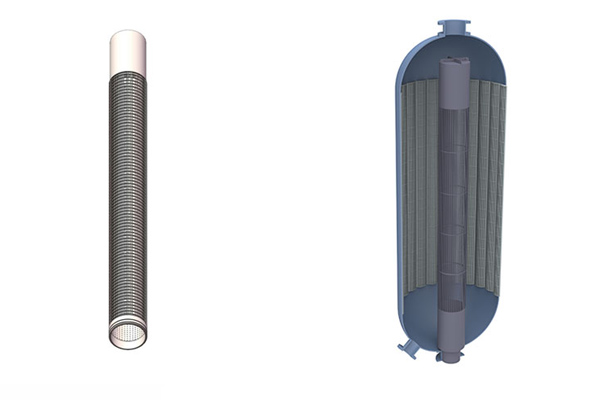
7. Optimized Design Improves Overall Process Efficiency
The performance of tower internals affects the entire process system.
A well-designed wedge wire pipe can improve:
- Fluid distribution
- Reaction efficiency
- Separation performance
- Equipment reliability
For example, in catalyst systems, uniform flow distribution helps maximize catalyst utilization.
In water treatment systems, proper internal distribution improves filtration and backwashing efficiency.
Common Applications of Tower Internal Wedge Wire Pipes
Catalyst Support and Reactor Systems
Used for:
- Catalyst retention
- Flow distribution
- Preventing media loss
Ion Exchange Systems
Used for:
- Resin retention
- Regeneration flow control
- Uniform water distribution
Absorption and Distillation Towers
Used for:
- Liquid distribution
- Gas-liquid contact optimization
Industrial Water Treatment
Used for:
- Internal collectors
- Filter vessels
- Backwash systems
Key Factors for Maximizing Long-Term Performance
To achieve reliable operation, engineers should consider:
1. Correct Slot Selection
Match slot size with process requirements.
2. Appropriate Material Selection
Choose materials according to corrosion and temperature conditions.
3. Optimized Hydraulic Design
Ensure sufficient open area and uniform flow distribution.
4. High Manufacturing Standards
Verify welding quality and dimensional accuracy.
5. Operating Condition Evaluation
Consider:
- Fluid characteristics
- Pressure
- Temperature
- Maintenance requirements
FAQ
1. What is the main advantage of a tower internal wedge wire pipe?
The main advantages are high open area, uniform flow distribution, low pressure drop, and long-term resistance to clogging.
2. How does wedge wire pipe improve tower performance?
It improves fluid distribution and reduces flow resistance, helping maintain stable process conditions.
3. Which materials are suitable for wedge wire pipes?
Common materials include SS304, SS316L, duplex stainless steel, and nickel alloys depending on application conditions.
4. Why do wedge wire pipes have longer service life?
Their V-shaped slots, strong welded construction, and corrosion-resistant materials help reduce clogging and structural failure.
Tower Internal Wedge Wire Pipe and Long-Term Performance are closely connected through design quality, material selection, and operating conditions.
With high open area, precise slot control, excellent mechanical strength, and strong resistance to fouling, wedge wire pipes provide reliable solutions for industrial towers and reactors.
For processes requiring continuous operation and stable performance, selecting the right wedge wire pipe design can improve efficiency, reduce maintenance costs, and extend the service life of the entire system.

 What Is a Coal Centrifuge Basket and How Does It Work?
 Engineering Principles Behind Vee Wire Scallops for Catalyst Support Systems
 Tower Internal Wedge Wire Pipe Maintenance and Reliability
 Catalyst Bed Support Grid Design for High Efficiency Reactor Flow
