How Much Flow Capacity Can a Wedge Wire Screen Cylinder Handle?
In industrial filtration systems, flow capacity is one of the most important factors when selecting a screening element. Whether used in wastewater treatment, water intake systems, food processing, mining, or pulp and paper production, a wedge wire screen cylinder must provide sufficient hydraulic performance while maintaining reliable solid-liquid separation.
A wedge wire screen cylinder is designed with continuous V-shaped profile wires welded around support rods, forming precise slot openings with high open area. Compared with perforated plates or woven mesh screens, wedge wire cylinders offer lower pressure drop, higher flow efficiency, and superior anti-clogging performance.
But how much flow can a wedge wire screen cylinder actually handle? The answer depends on several engineering factors including open area, slot size, approach velocity, fluid viscosity, and operating pressure.
What Is a Wedge Wire Screen Cylinder?
A wedge wire screen cylinder is a cylindrical filtration element manufactured by resistance-welding triangular profile wires onto longitudinal support rods. The V-shaped wire structure creates continuous slots that allow liquids to pass while retaining solids.
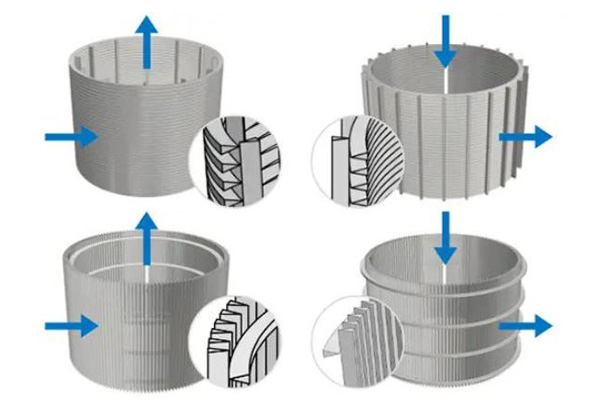
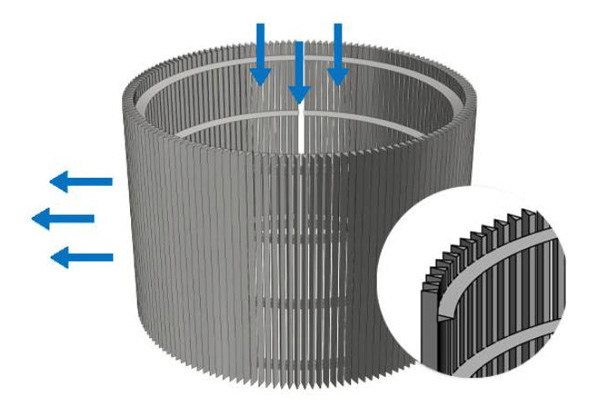
This design provides several important advantages:
High mechanical strength
Excellent flow capacity
Self-cleaning slot geometry
Reduced clogging risk
Long service life
Precise filtration accuracy
Wedge wire screen cylinders are widely used in:
Water treatment systems
Resin traps
Rotary drum filters
Centrifuge baskets
Intake screens
Screw press systems
Industrial strainers
Food and beverage filtration
What Determines the Flow Capacity of a Wedge Wire Screen Cylinder?
The flow capacity of a wedge wire screen cylinder is not fixed. It varies significantly depending on operating conditions and screen design.
Open Area Percentage
Open area is one of the most critical factors affecting flow capacity. It refers to the percentage of the screen surface available for fluid passage.
Typical wedge wire cylinders offer an open area ranging from 15% to 65%, depending on the wire profile and slot spacing.
A higher open area allows:
Greater throughput
Lower pressure drop
Improved hydraulic efficiency
Reduced energy consumption
Compared with perforated plates, wedge wire screens can provide up to 40% higher hydraulic capacity under similar operating conditions.
Slot Size
Slot opening directly affects both filtration precision and flow rate.
Smaller slot openings:
Increase filtration accuracy
Reduce flow capacity
Increase pressure drop
Larger slot openings:
Improve flow
Reduce resistance
Allow larger particles to pass
Common slot sizes include:
| Application |
Typical Slot Size |
| Water wells |
0.25 – 1.0 mm |
| Wastewater treatment |
1 – 5 mm |
| Food processing |
0.1 – 1 mm |
| Intake screens |
2 – 10 mm |
Flow Direction
Wedge wire cylinders commonly operate in two flow directions:
Outside-to-Inside (OTI)
Fluid enters from the outside surface and exits through the interior.
Benefits:
Large external filtration area
Suitable for coarse solids removal
Inside-to-Outside (ITO)
Fluid flows outward through the cylinder wall.
Benefits:
Easier solids discharge
Better compatibility with scraper systems
Common in rotary drum and centrifuge systems
Flow direction influences:
Solids accumulation
Cleaning efficiency
Pressure distribution
Overall hydraulic performance
Approach Velocity
Approach velocity refers to the speed at which liquid reaches the screen surface.
Higher velocities increase flow capacity but may also:
Increase pressure drop
Accelerate wear
Raise clogging risk
Typical design velocities include:
| Application |
Typical Velocity |
| Surface water intake |
0.15 – 0.3 m/s |
| Wastewater treatment |
0.3 – 0.6 m/s |
| Industrial filtration |
0.5 – 1.5 m/s |
Proper velocity selection is essential for balancing throughput and screen longevity.
Fluid Viscosity
Fluid viscosity significantly affects flow performance.
Low-viscosity liquids such as water flow easily through the screen surface, while thicker fluids:
Reduce effective capacity
Increase resistance
Require larger filtration area
Industries handling sludge, pulp, syrup, or oil often require oversized wedge wire cylinders to maintain acceptable throughput.
Pressure Differential
Pressure differential across the screen directly impacts flow rate.
Higher pressure can increase throughput temporarily, but excessive differential pressure may:
Damage the screen
Accelerate fouling
Increase energy consumption
Maintaining stable operating pressure is critical for long-term performance.
How Is Flow Capacity Calculated?
Engineers commonly estimate wedge wire screen cylinder flow capacity using the following equation:
Q=A×V
Where:
Q = Flow rate
A = Effective open area
V = Approach velocity
The effective open area is calculated by multiplying the total screen surface area by the open area percentage.
Typical Flow Capacity by Application
The capacity range of wedge wire screen cylinders varies widely across industries.
| Application |
Typical Flow Capacity |
| Water well screens |
5 – 200 GPM |
| Resin trap screens |
20 – 150 m3/hr |
| Inline strainers |
50 – 600 m3/hr |
| Wastewater drum screens |
100 – 1000 m3/hr |
| Surface water intake screens |
500 – 1500+ m3/hr |
| Centrifuge baskets |
Depends on solids concentration |
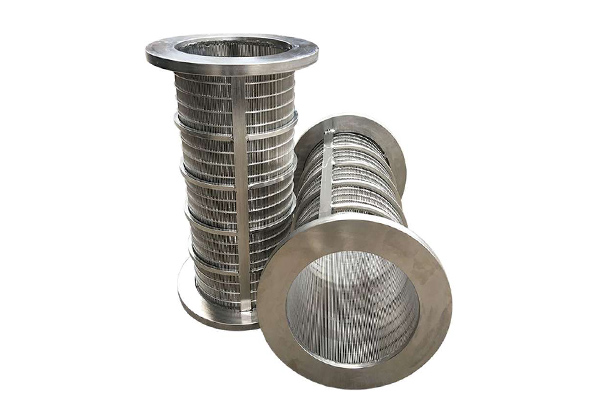
Large-diameter intake cylinders can process extremely high flow volumes because the entire cylindrical surface contributes to filtration.
Why Wedge Wire Cylinders Handle Higher Flow Than Perforated Screens
Wedge wire technology offers several hydraulic advantages over traditional perforated plates and woven mesh.
| Feature |
Wedge Wire Screen |
Perforated Plate |
| Open Area |
15% – 65% |
5% – 20% |
| Pressure Drop |
Lower |
Higher |
| Clogging Risk |
Low |
Moderate |
| Cleaning Efficiency |
Excellent |
Limited |
| Structural Strength |
High |
Moderate |
The V-shaped slot geometry reduces particle wedging and improves self-cleaning performance, allowing the screen to maintain higher effective flow over longer operating periods.
How to Properly Size a Wedge Wire Screen Cylinder
Selecting the correct wedge wire cylinder requires more than matching nominal flow rate.
Engineers should also consider:
Peak flow conditions
Solids concentration
Cleaning method
Pressure loss limitations
Fluid characteristics
Future expansion capacity
In most industrial systems, a safety margin of 20% to 50% is recommended to prevent overload during peak operating conditions.
Oversizing slightly can:
Reduce pressure drop
Extend service life
Improve cleaning performance
Lower maintenance frequency
Common Problems That Reduce Flow Capacity
Even properly designed wedge wire cylinders can experience reduced performance over time.
Common causes include:
Solids Accumulation
Heavy solids buildup reduces effective open area.
Incorrect Slot Size
Slots that are too small increase clogging and resistance.
Excessive Velocity
High velocity may force particles into slot openings.
Improper Cleaning
Insufficient backwashing or scraper performance can reduce throughput.
Routine maintenance and proper design selection help maintain stable long-term capacity.
Frequently Asked Questions
What is the maximum flow rate of a wedge wire screen cylinder?
Large industrial wedge wire cylinders can exceed 1500 m³/hr, depending on diameter, open area, and operating conditions.
Does slot size affect flow capacity?
Yes. Larger slot openings generally increase flow capacity, while smaller slots provide finer filtration but reduce throughput.
Why do wedge wire screens have better flow than perforated plates?
Their continuous slot structure and higher open area create lower hydraulic resistance and better anti-clogging performance.
What is the ideal approach velocity?
Typical velocities range from 0.15 to 0.6 m/s depending on the application and environmental requirements.
Can wedge wire screen cylinders handle high-pressure systems?
Yes. Stainless steel wedge wire cylinders are highly durable and suitable for many high-pressure industrial filtration systems.
The flow capacity of a wedge wire screen cylinder depends on multiple factors including open area, slot size, velocity, pressure, and fluid characteristics. Small industrial cylinders may process only a few gallons per minute, while large intake screens can handle over 1500 m³/hr.
Thanks to their high open area, non-clogging V-shaped profile, and strong structural design, wedge wire screen cylinders remain one of the most efficient solutions for industrial liquid-solid separation applications.
When selecting a screen cylinder, proper sizing and operating conditions are essential to achieving maximum hydraulic performance and long-term reliability.

 What Is a Coal Centrifuge Basket and How Does It Work?
 Engineering Principles Behind Vee Wire Scallops for Catalyst Support Systems
 Tower Internal Wedge Wire Pipe Maintenance and Reliability
 Catalyst Bed Support Grid Design for High Efficiency Reactor Flow
