A wedge wire screen plate is a precision-engineered filtration component widely used in industrial separation processes. It is designed to deliver reliable performance in environments that require consistent liquid-solid separation, high mechanical strength, and long service life.
Unlike conventional mesh or perforated sheets, wedge wire screen plates are built with a welded structure that provides both accuracy and durability, making them suitable for demanding industrial applications such as water treatment, mining, and food processing.
Structure of a Wedge Wire Screen Plate
The performance of a wedge wire screen plate is directly linked to its unique construction method and material design. Each component is engineered to optimize flow efficiency and reduce clogging risk.
1. V-shaped profile wires
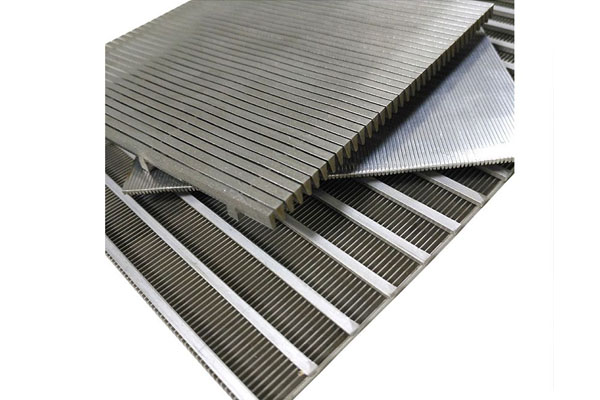
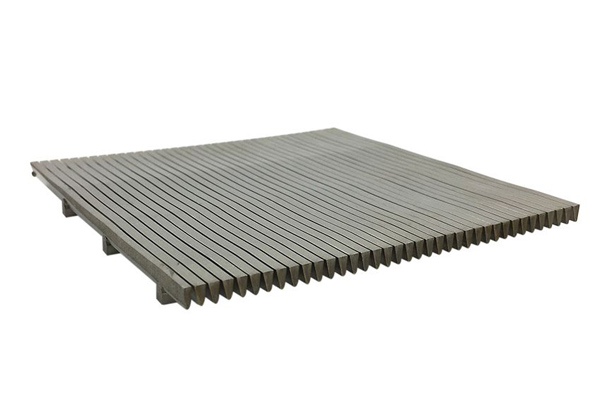
The screening surface is formed by V-shaped (wedge-shaped) wires arranged in parallel. These wires create continuous slot openings that are narrow at the surface and gradually widen inward. This geometry helps reduce particle blockage and improves flow stability.
2. Support rod system
The profile wires are welded at every intersection to support rods placed either longitudinally or laterally. This fully welded structure ensures high rigidity and allows the screen to withstand pressure, vibration, and mechanical stress during operation.
3. Continuous slot design
Unlike punched or perforated plates, wedge wire screens use continuous slots instead of individual holes. This structure reduces the likelihood of clogging because particles either pass through the opening or are retained on the surface without becoming trapped inside.
4. Flexible forming options
Although commonly produced as flat panels, wedge wire screen plates can also be manufactured into curved, cylindrical, or conical shapes. This flexibility allows them to be adapted to different separation systems.
5. Material selection
Depending on operating conditions, these screens are typically made from stainless steel grades such as 304, 316L, 321, and 904L. For highly corrosive or high-pressure environments, duplex stainless steels like 2205 and 2507 or sp ecialized alloys may be used.
Key Industrial Applications
Wedge wire screen plates are used across multiple industries where precise separation and durability are essential.
Water and wastewater treatment
They are commonly applied in intake screening systems, sludge dewatering units, and filtration assemblies. Their open structure supports stable flow while protecting downstream equipment from solid contamination.
Mining and mineral processing
In mining operations, wedge wire screens are used for ore classification, coal preparation, and slurry dewatering. Their strength allows them to perform reliably under abrasive conditions.
Food and beverage industry
These screens are used in processes such as starch extraction, sugar refining, brewing, and dairy separation. Their smooth surface and hygienic design make them suitable for applications requiring sanitary standards.
Oil, gas, and petrochemical industry
Wedge wire screen plates are applied in sand control systems, catalyst retention, and gas-liquid separation processes, where durability and precision are critical.
Pulp and paper industry
They support fiber recovery, pulp thickening, and wastewater filtration, helping improve material efficiency and process stability.
Architectural and environmental use
Due to their clean structure and corrosion resistance, they are also used in drainage systems, protective covers, and facade elements in public infrastructure.
Advantages of Wedge Wire Screen Plates
Wedge wire screen plates are preferred in industrial systems due to several key performance advantages:
Anti-clogging performance: The self-cleaning slot geometry reduces blockage risk
High mechanical strength: Fully welded structure supports heavy loads and pressure
High open area: Allows higher throughput and lower pressure drop
Low maintenance requirement: Easy to clean through backwashing or surface flushing
Long service life: Resistant to wear, corrosion, and continuous operation
These characteristics make wedge wire screen plates a cost-effective solution for long-term industrial filtration systems.
FAQ: Wedge Wire Screen Plate
Q1: How do I choose the correct slot size for my process?
Slot size selection depends on the particle size you need to retain and the required flow rate. In practice, testing or process data is often used to determine the optimal balance between separation accuracy and throughput.
Q2: Can wedge wire screen plates be used under high pressure conditions?
Yes. Their fully welded construction provides strong mechanical integrity, making them suitable for high-pressure filtration and heavy-duty industrial environments.
Q3: What causes premature wear in wedge wire screens?
Abrasion from sharp particles, improper flow velocity, or incorrect material selection are common causes. Choosing the right alloy for the working environment significantly extends service life.
Q4: Are these screens suitable for continuous operation systems?
Yes. They are designed for continuous flow applications and are commonly used in systems that run 24/7, such as wastewater plants and mineral processing lines.
Q5: How are wedge wire screen plates cleaned in operation?
Cleaning is typically achieved through backwashing, surface rinsing, or mechanical scraping depending on system design and contamination type.
Q6: Can wedge wire screen plates be customized for different equipment?
Yes. They can be manufactured in flat, curved, cylindrical, or conical forms to match specific industrial equipment requirements.

 Engineering Principles Behind Vee Wire Scallops for Catalyst Support Systems
 Tower Internal Wedge Wire Pipe Maintenance and Reliability
 Catalyst Bed Support Grid Design for High Efficiency Reactor Flow
 Choosing the Right Vee Wire Scallops for High-Performance Radial Flow Internals
