How to Choose the Right Filter Nozzle for Sand Filters
Selecting the correct filter nozzle for sand filtration systems is essential for maintaining performance, preventing media loss, and ensuring long-term operational stability. Whether used in water treatment, industrial filtration, or swimming pool systems, the right nozzle improves efficiency, reduces maintenance, and supports consistent filtration quality.
What Is a Filter Nozzle and Why Does It Matter?
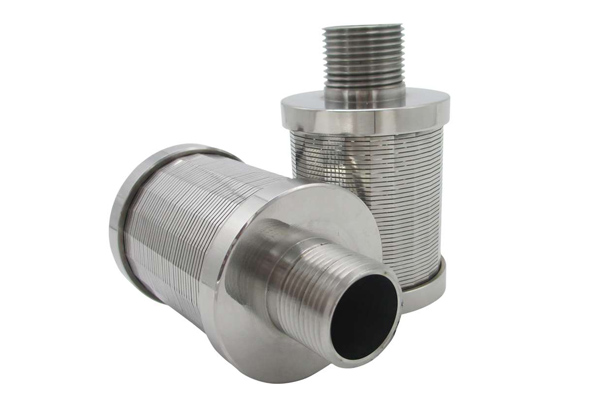
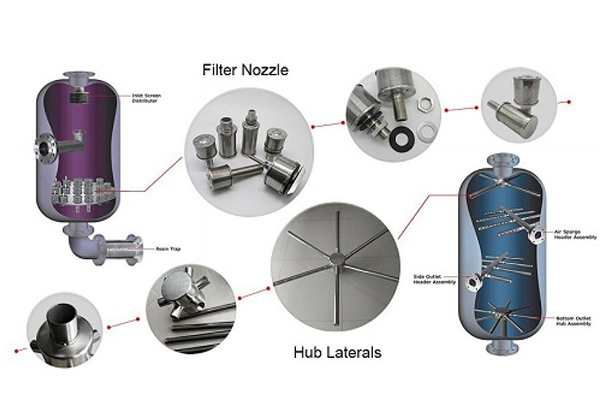
A filter nozzle is a critical component installed in the underdrain system of a sand filter. Its main functions include:
Retaining filter media (such as sand or anthracite)
Allowing uniform distribution of water or air
Supporting effective backwashing
Choosing the wrong nozzle can lead to media leakage, clogging, uneven flow distribution, or system inefficiencies.
Key Question: How Do You Select the Right Filter Nozzle?
1. How Should Slot Size Match Filter Media?
The slot width of the nozzle must be carefully matched to the size of the filter media.
Best Practice:
Slot width should be 50%–70% of the smallest media particle size
Example:
For sand with a minimum size of 0.5 mm, the recommended slot width is approximately 0.3 mm
Why it matters:
Prevents media loss during operation and backwashing
Maintains filtration integrity
Reduces the risk of clogging from undersized slots
2. How Do Flow Rate and Pressure Affect Nozzle Selection?
Each nozzle has a defined flow capacity. It must align with both:
Service flow rate (normal filtration operation)
Backwash flow rate (cleaning phase)
Considerations:
Higher flow systems require larger or more nozzles
Backwash conditions often involve higher velocities and pressures
The nozzle must withstand pressure without deformation or failure
Practical Tip:
Calculate total system flow and divide it by the number of nozzles to ensure each nozzle operates within its safe capacity range.
3. Which Material Is Best for Your Application?
Material selection depends on temperature, chemical exposure, and mechanical demands.
Common Options:
Polypropylene (PP):Cost-effective
Suitable for most standard water treatment applications
Good chemical resistance under moderate conditions
PVDF:Excellent resistance to aggressive chemicals
Suitable for higher temperature environments
Stainless Steel:High mechanical strength
Ideal for high-pressure or high-temperature systems
Long service life in demanding industrial environments
Recommendation:
Choose materials based on long-term operating conditions rather than initial cost alone.
4. What Nozzle Geometry Works Best?
Nozzle design directly impacts performance and fouling resistance.
Preferred Design Features:
V-shaped (wedge wire) slots
Vertical slot orientation
Reinforced support ribs
Benefits:
Reduced clogging and fouling
Improved flow distribution
Enhanced durability and lifespan
5. How Does Underdrain Layout Influence Performance?
The number and arrangement of nozzles (nozzle density) affect filtration efficiency.
Key Points:
Higher nozzle density improves flow uniformity
Even distribution enhances backwash effectiveness
Poor layout can lead to dead zones or channeling
Typical Approach:
Determine nozzle quantity based on tank area and total flow
Ensure even spacing across the filter floor
Additional Considerations
Installation and Maintenance
Ensure proper sealing to prevent leakage
Choose designs that allow easy inspection and replacement
Compatibility with Existing Systems
Match thread type, mounting style, and dimensions
Confirm compatibility with current underdrain structures
A Practical Selection Framework
To choose the right filter nozzle for sand filters:
1.Match slot size to media (50%–70% rule)
2.Verify flow capacity for both service and backwash conditions
3.Select materials based on chemical and temperature exposure
4.Prefer V-shaped slot geometry for durability and anti-clogging
5.Optimize nozzle density for even flow distribution
At YUBO Filtration, we offer high-quality stainless steel filter nozzles designed to meet your filtration needs. Reach out to learn more about how these essential components can improve your filtration system.
Frequently Asked Questions (FAQ)
Q: Can I use the same nozzle for different types of media?
A: Not always. Different media sizes require different slot widths to prevent loss and maintain efficiency.
Q: What happens if the slot size is too large?
A: Filter media may escape, leading to reduced filtration performance and potential downstream issues.
Q: Is stainless steel always better than plastic?
A: Not necessarily. While stronger, stainless steel is more expensive. For many standard applications, polypropylene performs well.
Q: How often should filter nozzles be replaced?
A: It depends on operating conditions, but regular inspection during maintenance cycles is recommended.

 What Is a Coal Centrifuge Basket and How Does It Work?
 Engineering Principles Behind Vee Wire Scallops for Catalyst Support Systems
 Tower Internal Wedge Wire Pipe Maintenance and Reliability
 Catalyst Bed Support Grid Design for High Efficiency Reactor Flow
