Why Stainless Steel Filter Nozzles Are Better Than Plastic Nozzles
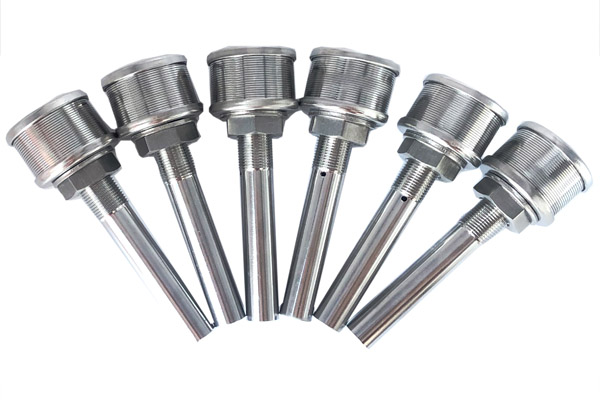
In industrial filtration and water treatment systems, the choice of filter nozzle material directly affects performance, reliability, and long-term operating costs. Among the available options, stainless steel filter nozzles have become the preferred solution for demanding applications.
What Are Filter Nozzles and Why Material Matters
Filter nozzles are critical components used in filtration tanks to retain media (such as sand, carbon, or resin) while allowing fluid or gas to pass through. They are commonly used in:
Water treatment plants
Desalination systems
Industrial filtration units
Swimming pool filtration systems
Agricultural irrigation setups
The material of the nozzle determines its resistance to pressure, temperature, chemicals, and mechanical wear. Choosing the wrong material can lead to frequent failures, reduced efficiency, and increased maintenance costs.
Key Advantages of Stainless Steel Filter Nozzles
1. Superior Durability and Service Life
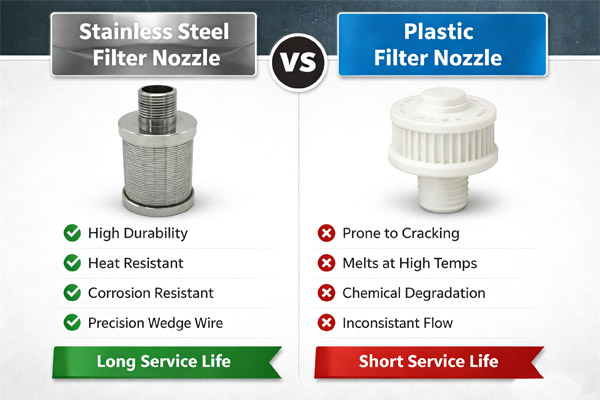
Stainless steel screen nozzles are engineered for long-term use in harsh environments. Unlike plastic, which can crack, warp, or degrade over time, stainless steel maintains its structural integrity under:
High pressure conditions
Continuous operation
Mechanical stress from filtration media
This durability translates into a significantly longer service life, reducing replacement frequency and downtime.
2. High Temperature Resistance
Many industrial processes involve elevated temperatures that exceed the limits of plastic materials. Stainless steel nozzles can operate reliably in high-temperature environments without deformation or loss of performance.
Plastic nozzles, by contrast, are prone to:
Softening
Warping
Melting under extreme heat
This makes stainless steel the safer and more reliable choice for thermal-intensive applications.
3. Excellent Corrosion and Chemical Resistance
Stainless steel grades such as 304 and 316 offer strong resistance to:
Acids and alkalis
Saline water (including seawater)
Industrial chemicals and solvents
This makes stainless steel particularly suitable for:
Desalination plants
Chemical processing systems
Wastewater treatment facilities
Plastic materials may degrade or become brittle when exposed to aggressive chemicals over time.
4. Improved Filtration Efficiency and Precision
Stainless steel filter nozzles often use precision-welded wedge wire structures. These designs provide:
Uniform and accurate slot openings
Consistent flow distribution
Reduced clogging risk
Compared to molded plastic nozzles, stainless steel offers better control over filtration performance, especially in systems requiring high precision.
5. Reduced Maintenance Requirements
Because of their mechanical strength and resistance to wear, stainless steel nozzles require less frequent maintenance. Benefits include:
Fewer system interruptions
Lower labor costs
Reduced risk of unexpected failures
Over time, this contributes to a lower total cost of ownership despite a higher initial investment.
6. No Microplastic Contamination
An increasingly important consideration in modern filtration systems is environmental and product safety. Stainless steel does not shed particles, ensuring:
Clean filtration output
No risk of microplastic contamination
Compliance with stricter environmental standards
This is especially important in potable water systems and sensitive industrial processes.
When Are Plastic Nozzles Still Suitable?
Plastic filter nozzles can still be a practical choice in certain scenarios, such as:
Low-pressure systems
Mild chemical environments
Budget-sensitive projects
They offer a lower upfront cost and are easier to handle in lightweight applications. However, these advantages diminish in demanding industrial conditions.
At YUBO Filtration, we offer high-quality stainless steel filter nozzles designed to meet your filtration needs. Reach out to learn more about how these essential components can improve your filtration system.
Frequently Asked Questions
Q1: Are stainless steel filter nozzles worth the higher cost?
Yes. While the initial investment is higher, stainless steel nozzles typically offer longer service life, lower maintenance costs, and improved system reliability, making them more cost-effective over time.
Q2: Which stainless steel grade is better for filter nozzles?
Grade 304 is suitable for general applications, while 316 is preferred for environments with high salinity or strong chemical exposure due to its enhanced corrosion resistance.
Q3: Do stainless steel nozzles clog less than plastic ones?
Generally, yes. Precision wedge wire construction provides consistent slot sizes, which helps reduce clogging and ensures stable flow distribution.
Q4: Can stainless steel nozzles be used in drinking water systems?
Yes. Stainless steel is widely used in potable water systems because it does not release harmful substances or microplastics.

 What Is a Coal Centrifuge Basket and How Does It Work?
 Engineering Principles Behind Vee Wire Scallops for Catalyst Support Systems
 Tower Internal Wedge Wire Pipe Maintenance and Reliability
 Catalyst Bed Support Grid Design for High Efficiency Reactor Flow
