Top Applications of Filter Nozzles in Water Treatment Systems
Filter nozzles are widely used in water treatment systems where controlled flow distribution, effective backwashing, and reliable media retention are required. Their role is often unseen, yet they directly influence filtration efficiency, water quality, and system stability.
What Do Filter Nozzles Do in a Filtration System?
Before exploring applications, it is important to understand their core function.
Filter nozzles are installed inside filtration vessels, typically at the bottom, where they:
Allow water to pass through
Retain filter media such as sand, carbon, or resin
Distribute flow evenly during filtration and backwashing
This combination ensures consistent filtration performance and prevents media loss.
1. Municipal Drinking Water Treatment
Filter nozzles play a central role in municipal water treatment plants. They support gravity filters and pressure filters by maintaining uniform flow distribution across the filter bed.
Why they matter:
Help remove suspended solids and contaminants
Ensure even filtration across large-scale systems
Maintain stable water quality for safe consumption
Their reliability is critical in systems that operate continuously and handle large volumes of water.
2. Industrial and Municipal Wastewater Treatment
In wastewater treatment, filter nozzles are used to manage complex and variable water conditions. They support filtration units that remove solids and pollutants before discharge or reuse.
Key advantages:
Handle high flow rates and heavy particle loads
Support effective backwashing for long-term operation
Improve overall treatment efficiency
Their durability makes them suitable for demanding industrial environments.
3. Ion Exchange and Water Softening Systems
Filter nozzles are essential in ion exchange vessels, where they retain resin beads while allowing treated water to flow through.
Role in these systems:
Prevent resin leakage
Maintain even distribution of water and chemicals
Support consistent ion exchange performance
This is especially important in applications such as demineralization and water softening.
4. Activated Carbon Filtration
Activated carbon filters rely on sufficient contact time between water and carbon media to remove chlorine, organic compounds, and odors.
How filter nozzles help:
Ensure uniform water distribution across the carbon bed
Prevent media loss during operation and backwashing
Maintain stable filtration performance
Proper nozzle design directly impacts treatment efficiency in these systems.
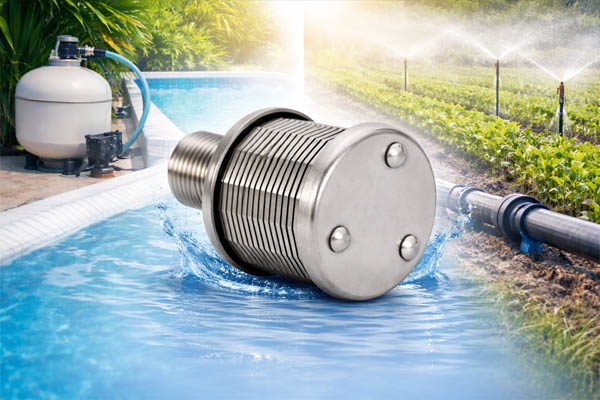
5. Swimming Pool Filtration Systems
Both residential and commercial swimming pools use filter nozzles in sand filtration systems.
Benefits include:
Retaining sand media inside the filter tank
Supporting effective backwashing cycles
Maintaining clear and clean water
Their consistent performance helps reduce maintenance frequency.
6. Agricultural Irrigation Systems
In irrigation systems, filter nozzles are used to remove sediment and organic matter that could clog pipelines and emitters.
Why they are important:
Protect irrigation infrastructure
Improve water distribution efficiency
Reduce system downtime caused by blockages
They are especially valuable in areas where water quality varies.
Key Features That Enable These Applications
Across all applications, filter nozzles share several performance advantages:
Efficient Backwashing
Their design allows re verse flow to lift and clean the filter bed, restoring performance without manual intervention.
Low Pressure Loss
Optimized slot structures reduce resistance, improving flow efficiency and lowering energy consumption.
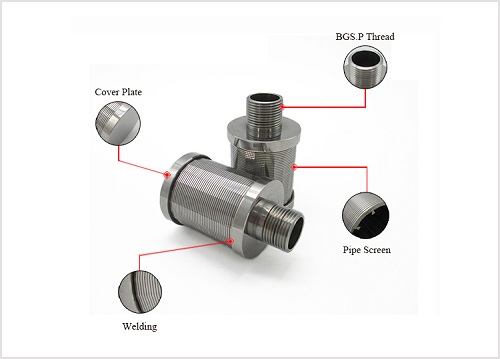
Material Flexibility
Filter nozzles are available in materials such as:
Polypropylene (PP)
Stainless steel
PVDF
This allows them to perform reliably in different chemical and environmental conditions.
Why Choosing the Right Filter Nozzle Matters
The effectiveness of a filtration system depends heavily on proper component selection. Choosing the right nozzle design, slot size, and material ensures:
Consistent filtration performance
Reduced maintenance costs
Longer system lifespan
In many cases, filter nozzles are a small component with a significant impact on overall system efficiency.
FAQ: Filter Nozzles in Water Treatment
Q1: Are filter nozzles suitable for both small and large systems?
Yes. They are used in everything from small pool filters to large municipal treatment plants.
Q2: How do filter nozzles improve backwashing efficiency?
They allow uniform re verse flow, which lifts and cleans the media bed evenly.
Q3: What factors affect filter nozzle performance?
Slot size, material, flow rate, and system design all play important roles.
Q4: Can filter nozzles be used in chemically aggressive environments?
Yes. Materials like stainless steel and PVDF provide strong resistance to corrosion and chemicals.

 What Is a Coal Centrifuge Basket and How Does It Work?
 Engineering Principles Behind Vee Wire Scallops for Catalyst Support Systems
 Tower Internal Wedge Wire Pipe Maintenance and Reliability
 Catalyst Bed Support Grid Design for High Efficiency Reactor Flow
