Common Mistakes When Selecting Wedge Wire Stainless Steel Filter Nozzles (And How to Avoid Them)
Wedge wire stainless steel filter nozzles are widely used in filtration and separation systems where durability, precision, and high flow performance are required. Their V-shaped wire structure provides excellent strength and anti-clogging characteristics, making them a preferred choice in water treatment, chemical processing, and media filtration systems.
Why Proper Selection Matters
A well-designed wedge wire stainless steel filter nozzle ensures:
Stable flow distribution
Controlled pressure drop
Reliable media retention
Long service life under harsh conditions
Incorrect selection, on the other hand, often results in higher operational costs and frequent maintenance.
1. Underestimating Pressure Drop and Slot Size
The Problem
One of the most common mistakes is selecting a slot size that is too small. While smaller slots improve filtration precision, they also:
Increase pressure drop
Reduce flow rate
Accelerate clogging
How to Avoid It
Match slot size closely to the target particle or media size
Balance filtration accuracy with flow performance
Consider real operating viscosity and solids load
Quick Q&A
Q: Does a smaller slot always mean better filtration?
A: No. Excessively small slots can severely restrict flow and reduce overall system efficiency.
2. Neglecting Material Compatibility
The Problem
Choosing an unsuitable stainless steel grade can lead to:
Corrosion and pitting
Reduced mechanical strength
Premature failure
This is especially critical in environments with high salinity, chemicals, or elevated temperatures.
How to Avoid It
Analyze operating conditions, including:
pH level
Temperature
Chemical composition
Select appropriate materials:
304 stainless steel: Standard applications
316L stainless steel: Corrosive or chloride-rich environments
Quick Q&A
Q: When should 316L be used instead of 304?
A: When the system involves corrosive media, especially chlorides or aggressive chemicals.
3. Ignoring Structural Strength Requirements
The Problem
In high-pressure or large-scale systems, insufficient structural strength can cause:
Deformation of the nozzle
Slot distortion
Reduced filtration accuracy
How to Avoid It
Use wedge wire (V-shaped profile) for higher strength
Add reinforcing elements such as: Support ribs
Inner tubes
Verify pressure ratings before installation
Quick Q&A
Q: Why is wedge wire structure stronger than mesh?
A: The welded V-shaped wires provide higher rigidity and load-bearing capacity.
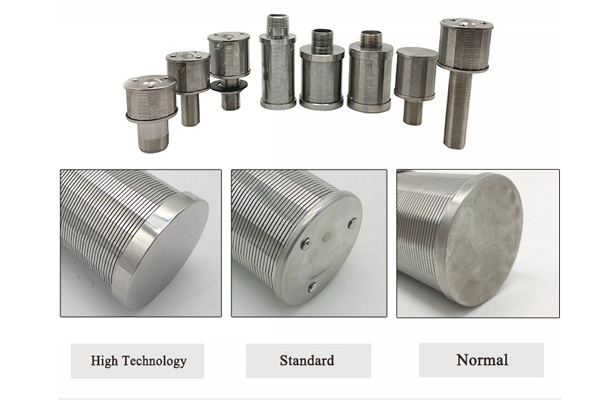
4. Improper Flow Direction Design
The Problem
Failing to define the correct flow direction can result in:
Reduced filtration efficiency
Increased clogging risk
Poor backwashing performance
Typical configurations include:
Outside-to-inside flow
Inside-to-outside flow
How to Avoid It
Define flow direction during design stage
Align nozzle structure with system requirements
Consider cleaning method (e.g., backwash or air scour)
Quick Q&A
Q: Does flow direction affect clogging?
A: Yes. Proper flow direction improves self-cleaning and reduces blockage.
5. Overlooking Surface Finish
The Problem
Surface quality is often ignored but plays a key role in performance:
Rough surfaces increase friction
Particles adhere more easily
Cleaning becomes more difficult
How to Avoid It
Choose smooth, polished surface finishes
Ensure consistent welding and finishing quality
Consider applications where hygiene or fouling is critical
Quick Q&A
Q: Can surface finish affect lifespan?
A: Yes. A smoother surface reduces fouling and extends service life.
6. Inadequate Open Area Design
The Problem
Even with correct slot size, insufficient open area can:
Limit flow capacity
Increase pressure drop
Reduce system efficiency
How to Avoid It
Calculate total open area based on system flow rate
Optimize nozzle diameter, slot number, and layout
Avoid undersized designs in high-flow applications
Quick Q&A
Q: What is the impact of low open area?
A: It restricts throughput and increases energy consumption.
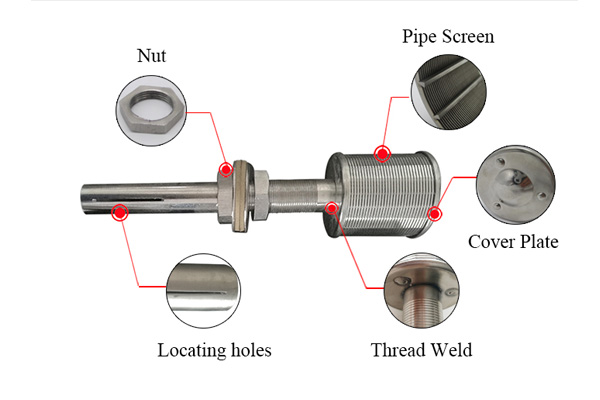
Key Take aways
Proper slot size to balance filtration and flow
Correct stainless steel grade for the environment
Adequate structural strength for pressure conditions
Defined flow direction for optimal performance
Smooth surface finish to reduce fouling
Sufficient open area for system capacity
FAQ: Wedge Wire Stainless Steel Filter Nozzles
1. What is the typical slot size range for wedge wire filter nozzles?
Slot sizes generally range from 0.02 mm to 1.0 mm, depending on the filtration accuracy required and the type of media used.
2. Can wedge wire filter nozzles be used for both filtration and distribution?
Yes, they are widely used for both filtration and fluid distribution, especially in underdrain systems and media support layers.
3. Are wedge wire filter nozzles suitable for high-temperature or harsh environments?
Yes, especially when made from materials like 316L stainless steel, they perform well under high temperature and corrosive conditions.
4. How are wedge wire filter nozzles typically installed?
They are usually installed using threaded connections, mounting plates, or welded fittings, depending on the system design and application requirements.

 What Is a Coal Centrifuge Basket and How Does It Work?
 Engineering Principles Behind Vee Wire Scallops for Catalyst Support Systems
 Tower Internal Wedge Wire Pipe Maintenance and Reliability
 Catalyst Bed Support Grid Design for High Efficiency Reactor Flow
