Wedge Wire Stainless Steel Filter Nozzles in Ion Exchange Systems: Functions and Design
Wedge wire stainless steel filter nozzles are widely used in ion exchange systems for their durability, precision filtration, and stable hydraulic performance. As water treatment and chemical processing systems become more demanding, these nozzles are increasingly selected to improve efficiency, extend service life, and protect high-value resin media.
What Are Wedge Wire Stainless Steel Filter Nozzles?
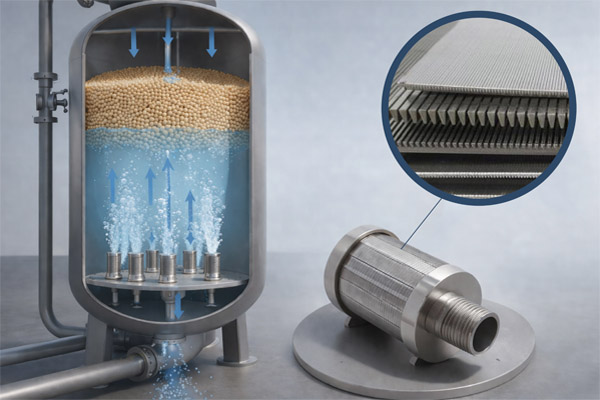
Wedge wire filter nozzles are constructed using V-shaped profile wires welded onto support rods, forming continuous slots with high structural strength. When manufactured from stainless steel, they offer excellent resistance to corrosion, temperature, and mechanical stress.
In ion exchange vessels, these nozzles are typically installed on bottom or intermediate plates to support filtration, distribution, and backwashing processes.
Core Functions in Ion Exchange Systems
1. Resin and Media Retention
One of the primary roles of filter nozzles is to prevent ion exchange resin beads from escaping the vessel.
Precisely controlled slot openings retain media effectively
Protect downstream equipment from contamination
Reduce resin loss and operating costs
This is particularly important in systems using high-value or fine resin materials.
2. Uniform Flow Distribution
Wedge wire nozzles ensure even distribution of:
Service water during operation
Regenerant chemicals during ion exchange cycles
Uniform flow reduces channeling within the resin bed and improves overall exchange efficiency.
3. Backwash and Air Scour Efficiency
During cleaning cycles, nozzles must handle reverse flow and air injection.
Distribute backwash water evenly
Support air scour to loosen compacted resin
Maintain stable flow under varying pressure conditions
Proper nozzle design ensures effective cleaning and longer resin lifespan.
4. Structural Strength and Durability
Stainless steel construction provides:
High mechanical strength under pressure
Resistance to chemical corrosion
Stability at elevated temperatures
Common materials include SS304, SS316L, and Duplex 2205, selected based on system requirements.
Key Design Features
The defining feature of wedge wire nozzles is their slot geometry.
Narrow outer openings prevent particle entry
Wider internal channels reduce clogging
Self-cleaning effect improves long-term performance
This design significantly reduces fouling compared to perforated alternatives.
2. Optimized Slot Width Selection
Slot width is critical for balancing retention and flow.
Typical range: 0.1 mm to 1.0 mm
Recommended: 50–70% of the smallest media size
Accurate slot sizing ensures both effective filtration and minimal pressure loss.
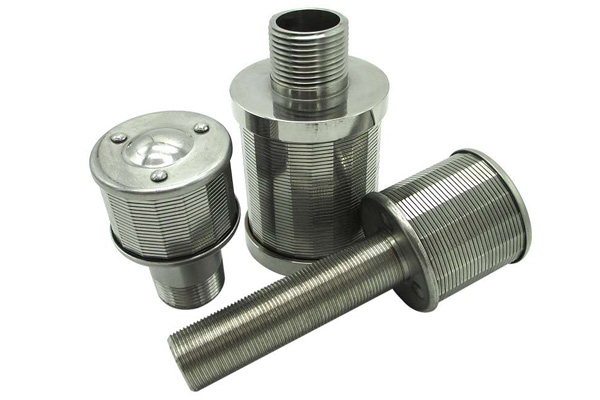
3. Nozzle Type and Tail Length
Different installation environments require different nozzle structures:
Short-tail nozzles: Suitable for steel or stainless steel plates
Medium/long-tail nozzles: Designed for concrete floors and deeper distribution
Longer tails are often preferred in systems requiring combined water and air backwashing.
4. Open Area and Flow Capacity
The open area of the nozzle directly affects:
Flow rate
Pressure drop
Energy consumption
Wedge wire designs typically offer higher open area compared to traditional drilled nozzles, improving hydraulic efficiency.
5. Threading and Installation Design
Internal or external threads
Customizable mounting dimensions
Proper installation ensures secure fixation and prevents loosening during operation or backwash cycles.
Advantages Over Plastic Filter Nozzles
While polypropylene (PP) nozzles are widely used, stainless steel wedge wire nozzles offer several advantages:
Higher strength for high-pressure systems
Better resistance to temperature and mechanical stress
Longer service life in demanding environments
Reduced risk of deformation or cracking
These benefits make them a preferred choice in industrial-scale ion exchange systems.
Typical Applications
Wedge wire stainless steel filter nozzles are commonly used in:
Water treatment and softening systems
Demineralization (DM) plants
Condensate polishing units
Chemical processing and wastewater treatment
Their adaptability makes them suitable for both municipal and industrial applications.
Best Practices for Selection and Use
To maximize performance and reliability:
Match slot size to resin specifications
Verify flow rate and pressure requirements
Select appropriate stainless steel grade
Ensure compatibility with vessel structure
Consider full operation cycles, including backwash and air scour
Working with experienced manufacturers can help ensure optimal configuration and long-term system stability.
FAQ: Additional Practical Questions
1. Are wedge wire nozzles suitable for retrofitting existing systems?
Yes, but compatibility with the existing plate design, thread size, and hydraulic conditions must be evaluated before replacement.
2. How do I prevent clogging in high-fouling environments?
In addition to using wedge wire designs, regular backwashing and proper pre-filtration can significantly reduce fouling risk.
3. What factors affect the cost of stainless steel nozzles?
Material grade, slot precision, manufacturing method, and customization level all influence pricing.
4. Can these nozzles handle aggressive chemical regeneration processes?
Yes, especially when using higher-grade materials like SS316L or Duplex 2205, which offer enhanced corrosion resistance.
5. Do wedge wire nozzles require special maintenance?
They generally require less maintenance than traditional designs, but periodic inspection is recommended to ensure optimal performance.

 What Is a Coal Centrifuge Basket and How Does It Work?
 Engineering Principles Behind Vee Wire Scallops for Catalyst Support Systems
 Tower Internal Wedge Wire Pipe Maintenance and Reliability
 Catalyst Bed Support Grid Design for High Efficiency Reactor Flow
