Activated Carbon Filters: Why Stainless Steel Wedge Wire Filter Nozzles Matter
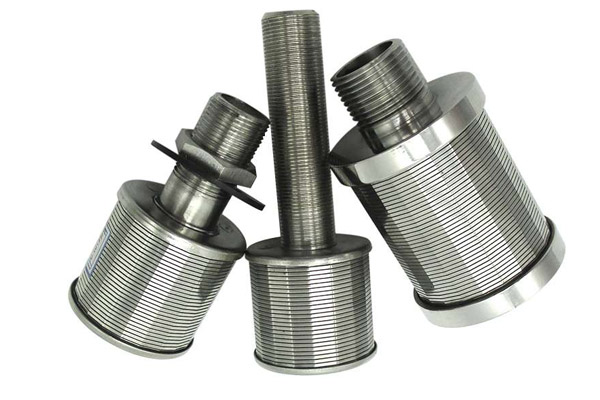
Activated carbon filtration systems are widely used in water treatment, chemical processing, and industrial purification. Their performance depends not only on the quality of the carbon media but also on the integrity of internal components—especially the filter nozzles. Among available options, stainless steel wedge wire filter nozzles stand out as a reliable and long-term solution for demanding environments.
Understanding the Role of Filter Nozzles in Activated Carbon Systems
Filter nozzles are installed at the bottom or laterals of filtration vessels. Their primary functions include:
Retaining filter media (activated carbon, sand, or resin)
Allowing liquid or gas to pass through efficiently
Distributing flow evenly across the vessel
Supporting effective backwashing
In activated carbon filters, improper nozzle selection can lead to media leakage, uneven filtration, and increased operational costs.
Key Advantages of Stainless Steel Wedge Wire Filter Nozzles
1. Precise Media Retention
Wedge wire nozzles are manufactured with continuous slot openings that can be tightly controlled (typically in the 5–80 μm range). This precision ensures that even fine activated carbon particles remain securely inside the vessel.
Why it matters:
Media loss not only increases replacement costs but can also damage downstream equipment such as pumps, valves, and membranes.
2. High Mechanical Strength
Stainless steel (commonly 304 or 316L) provides significantly greater structural strength than plastic materials. These nozzles can withstand:
High operating pressures
Rapid flow changes
Aggressive backwashing cycles
Result: Longer service life and reduced risk of failure during operation.
3. Anti-Clogging V-Shaped Design
The wedge wire profile features a V-shaped geometry, where the slot widens inward. This design minimizes clogging by preventing particles from getting trapped within the openings.
Benefits include:
Consistent filtration performance
Lower maintenance frequency
Reduced pressure drop over time
4. Uniform Flow Distribution
Even distribution of water or air is critical in activated carbon systems to ensure proper contact time between the fluid and media.
Wedge wire nozzles are engineered to:
Maintain consistent flow rates across the vessel
Eliminate channeling and dead zones
Improve over all filtration efficiency
5. Excellent Corrosion Resistance
Activated carbon filters are often used in chemically aggressive environments, including:
Wastewater treatment
Industrial effluents
Chemical processing systems
Stainless steel grades such as 316L offer strong resistance to:
Chlorides
Acids and alkalis
Oxidizing agents
Outcome: Reliable performance even under harsh operating conditions.
6. Efficient and Reliable Backwashing
High-intensity backwash flow
Repeated cleaning cycles without deformation
Faster system recovery
This reduces downtime and improves operational efficiency.
Comparison: Stainless Steel vs. Plastic Nozzles
| Feature |
Stainless Steel Wedge Wire |
Plastic Nozzles |
|
|
|
|
|
|
|
|
|
| Mechanical Strength |
High |
Moderate |
| Slot Precision |
Excellent |
Limited |
| Corrosion Resistance |
Excellent (316L) |
Moderate |
| Lifespan |
Long |
Shorter |
| Backwash Performance |
High |
Limited |
| Risk of Media Loss |
Low |
Higher |
|
|
|
|
|
|
|
|
|
Typical Applications
Stainless steel wedge wire filter nozzles are widely used in:
Activated carbon filtration systems
Ion exchange units
Pressure and gravity filters
Desalination pretreatment
Industrial water reuse systems
Their versatility makes them suitable for both liquid-solid and gas-solid separation processes.
Design Considerations for Optimal Performance
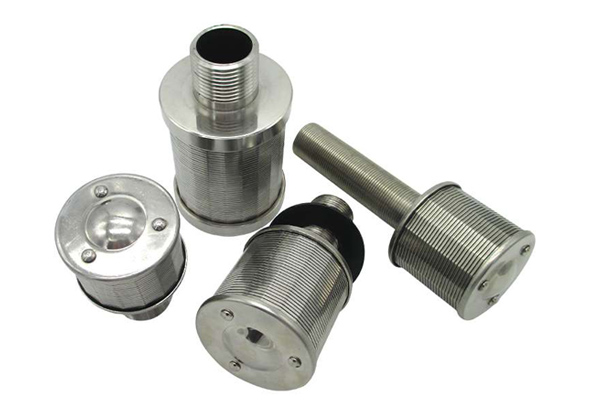
When selecting wedge wire filter nozzles, consider the following:
Slot size: Match with the smallest media particle size (typically 50–70%)
Material grade: Choose 304 or 316L depending on chemical exposure
Flow rate requirements: Ensure sufficient open area
Installation type: Threaded or flange-mounted configurations
Backwash conditions: Confirm structural tolerance
Proper selection ensures long-term reliability and optimal filtration efficiency.
FAQ: Practical Questions Users Often Ask
1. How do I choose the correct slot size for activated carbon?
A practical rule is to select a slot width that is 50–70% of the smallest carbon particle size. This ensures effective retention without restricting flow.
2. Can stainless steel nozzles be used in seawater or high-chloride environments?
Yes, but 316L stainless steel is recommended due to its enhanced resistance to chloride corrosion compared to 304.
3. How often do wedge wire nozzles need replacement?
In most industrial systems, stainless steel wedge wire nozzles can last several years, depending on operating conditions and maintenance practices.
4. What are the signs that filter nozzles need inspection or replacement?
Common indicators include:
Unexpected media loss
Increased pressure drop
Uneven flow distribution
Reduced filtration efficiency
5. Are wedge wire nozzles compatible with existing filtration systems?
In many cases, yes. They are available in various thread sizes and configurations, making them suitable for retrofitting into existing vessels.

 What Is a Coal Centrifuge Basket and How Does It Work?
 Engineering Principles Behind Vee Wire Scallops for Catalyst Support Systems
 Tower Internal Wedge Wire Pipe Maintenance and Reliability
 Catalyst Bed Support Grid Design for High Efficiency Reactor Flow
