Wedge Wire Nozzle Design: Flow Rate, Open Area and Strength Explained
Wedge wire nozzles are critical components in modern filtration and separation systems. Their performance directly affects filtration efficiency, media retention, and system longevity.
What Is a Wedge Wire Nozzle?
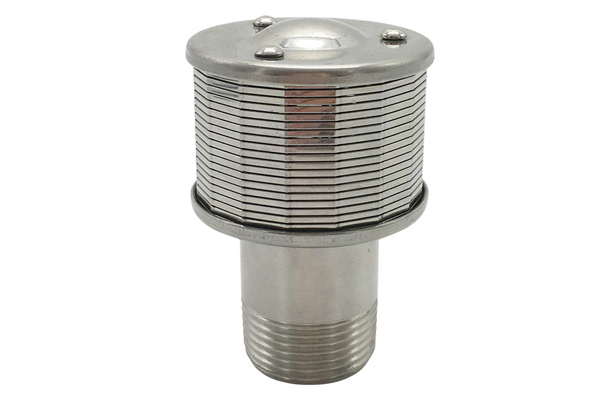
A wedge wire nozzle (also called a Johnson-type nozzle) is a filtration element made from V-shaped profile wires welded onto support rods. This structure creates continuous slots that allow fluid to pass while retaining filter media such as sand, activated carbon, or resin.
These nozzles are widely used in:
Water and wastewater treatment
Ion exchange systems
Pressure and gravity filters
Industrial process filtration
Why Design Parameters Matter
Selecting the right wedge wire nozzle is not just about choosing a slot size. Three key factors determine overall performance:
1.Flow rate capacity
2.Open area percentage
3.Mechanical strength
Balancing these factors ensures optimal filtration without compromising durability.
1. Flow Rate: How Much Fluid Can Pass?
What Determines Flow Rate?
The flow rate of a wedge wire nozzle depends on:
Slot width
Open area
Pressure differential
Fluid properties (viscosity, temperature)
Practical Insight
A larger slot opening increases flow rate but risks media leakage. Conversely, smaller slots improve retention but may restrict flow and increase pressure loss.
Design Tip
For most filtration systems:
Slot width should be 50–70% of the smallest media particle size
Ensure sufficient total nozzle count to distribute flow evenly
Common Question
Q: How can I increase flow rate without changing slot size?
A: Increase the number of nozzles or select a design with a higher open area. This maintains retention while improving throughput.
2. Open Area: The Key to Efficiency What Is Open Area?
Open area refers to the total percentage of the nozzle surface that allows fluid to pass through.
Why It Matters
Higher open area:
Reduces pressure drop
Improves flow distribution
Minimizes clogging risk
Lower open area:
Increases resistance
May lead to uneven filtration
Typical Range
Most wedge wire nozzles have an open area between 15% and 30%, depending on design and application.
Design Trade-Off
Increasing open area often means reducing structural material, which can affect strength. This is where engineering balance becomes critical.
Common Question
Q: Is higher open area always better?
A: Not necessarily. While it improves flow, excessive open area can weaken the structure and reduce durability under load.
3. Strength: Ensuring Long-Term Reliability
Why Strength Is Critical
Wedge wire nozzles operate under:
High pressure
Backwashing cycles
Mechanical stress from filter media
Insufficient strength can lead to deformation, slot distortion, or failure.
Factors Affecting Strength
Support rod spacing
Material selection (e.g., stainless steel grades like 304 or 316)
Welding quality
Design Considerations
Closer support rod spacing increases strength
Thicker wire profiles improve load-bearing capacity
High-quality welding ensures structural integrity
Common Question
Q: How do I choose between strength and open area?
A: For high-pressure or industrial systems, prioritize strength. For low-pressure applications, higher open area may be more beneficial.
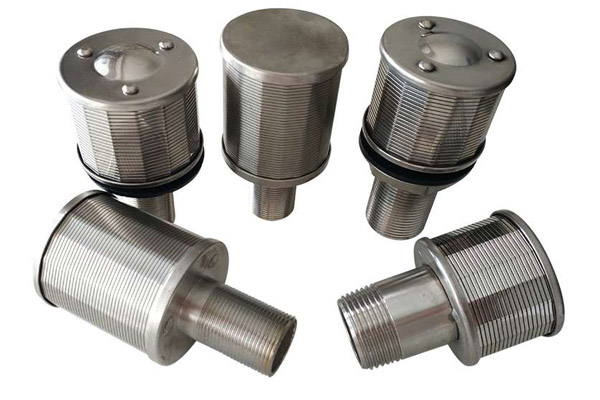
Balancing Flow Rate, Open Area, and Strength
These three factors are interconnected:
|
|
|
|
|
|
|
Lower filtration precision
|
|
|
|
|
|
|
|
Potentially lower open area
|
Engineering Approach
A well-designed nozzle achieves:
Adequate flow rate for system demand
Sufficient open area to minimize pressure loss
Structural strength to withstand operational stress
Application-Based Design Recommendations
Water Treatment Filters
Moderate slot size (0.2–0.5 mm)
Balanced open area and strength
Corrosion-resistant materials
Ion Exchange Systems
Fine slot size for resin retention
High precision manufacturing
Strong resistance to backwash cycles
Industrial Filtration
Reinforced structure
Optimized for high flow and pressure
Custom designs based on process conditions
How to Select the Right Wedge Wire Nozzle
When choosing a nozzle, consider:
1.Media size and type
2.Operating pressure and flow rate
3.Chemical environment
4.Installation method (threaded, welded, plate-mounted)
Quick Checklist
Match slot size to media
Verify open area percentage
Confirm mechanical strength for your system
Choose appropriate material grade
Frequently Asked Questions (FAQ)
Q: What is the ideal slot size for wedge wire nozzles?
A: Typically 50–70% of the smallest filter media size.
Q: How does open area affect pressure drop?
A: Higher open area reduces pressure drop and improves flow efficiency.
Q: Which material is best for durability?
A: Stainless steel 316 is preferred for corrosion resistance and long service life.
Q: Can wedge wire nozzles be customized?
A: Yes, most manufacturers offer custom designs based on flow, pressure, and media requirements.

 What Is a Coal Centrifuge Basket and How Does It Work?
 Engineering Principles Behind Vee Wire Scallops for Catalyst Support Systems
 Tower Internal Wedge Wire Pipe Maintenance and Reliability
 Catalyst Bed Support Grid Design for High Efficiency Reactor Flow
