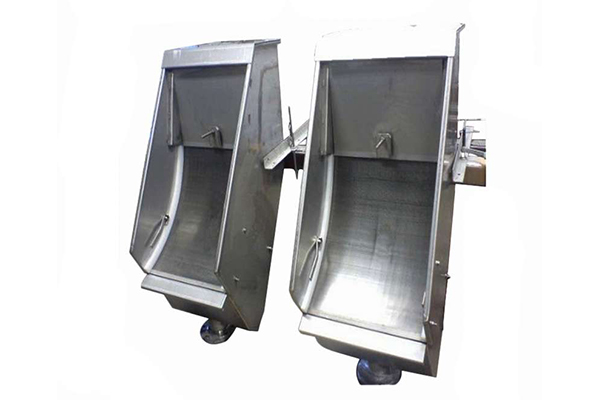
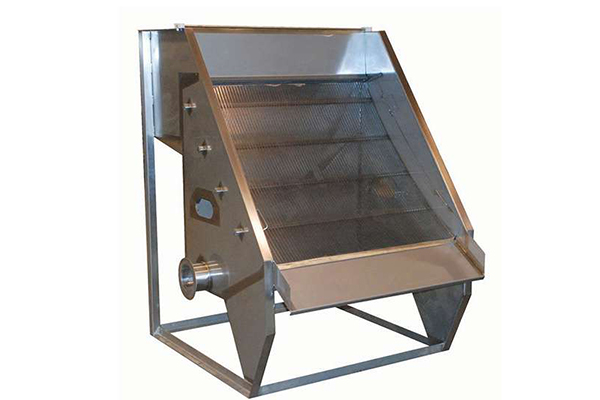
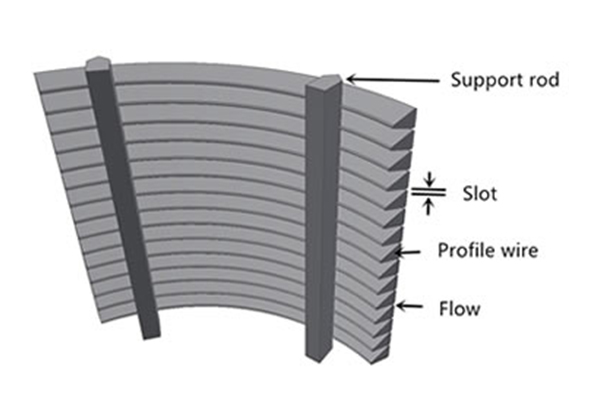
A sieve bend dewatering screen, sometimes called a solid-liquid separator or static wedge wire screen, is a non-powered, gravity-fed separation device. Shaped like a curve or parabolic arc, the screen is fitted with wedge wire or V-shaped wire elements that provide precise separation.
As wastewater flows over the curved surface, solids are retained on the screen while the filtered liquid passes through the openings. This simple mechanism offers high throughput with zero energy consumption.
Why Use a Solid-Liquid Separator in Wastewater Treatment?
Solid-liquid separation is a vital step in reducing the biological load, preventing pipe blockage, and protecting downstream equipment such as pumps, centrifuges, and filters.
Food and beverage processing
Dairy and cheese production
Fish and meat processing plants
Municipal wastewater treatment
Pulp and paper mills
Agricultural runoff management
Chemical and petrochemical facilities
Advantages of Sieve Bend Dewatering Screens
• Energy-Free Operation
These screens operate solely on gravity, eliminating the need for motors or power sources.
• High Efficiency Solid Removal
With slot openings typically ranging from 0.25 to 1 mm, wedge wire screens capture even fine particles.
• Durability and Corrosion Resistance
The sieve bends are constructed from stainless steel wedge wire, which resists chemical corrosion and mechanical wear.
• Minimal Maintenance
The fixed structure has no moving parts, meaning fewer breakdowns and reduced downtime.
• Compact Design
The curved design reduces footprint and integrates easily into new and existing systems.
How It Works: Static Screen Solid-Liquid Separation
The sieve bend screen uses gravity to direct flow across its curved surface. As the liquid moves downward, solids are intercepted by the narrow gaps between the wedge wire elements, while water and other fluids continue through.
Sieve Bend Dewatering Screen Applications Across Industries
1. Food Processing Wastewater:
Food factories utilize sieve bend dewatering screens to remove solids such as pulp, skins, and fibrous materials from rinse water and processing waste.
2. Paper and Pulp Mills:
These screens efficiently separate fiber slurries and prevent solids from entering treatment tanks.
3. Fish and Meat Processing:
Fat, tissue, and bone fragments are easily captured before discharge or further treatment.
4. Agricultural Wastewater:
Gravity-fed solid-liquid separators are ideal for manure management and runoff filtration.
5. Municipal Sewage Plants:
Used as a primary screen, sieve bends reduce organic loads early in the treatment process.
Customization Options Available
• Slot size: Typically between 0.25 mm and 1 mm, depending on application needs.
• Material: Most screens are made from stainless steel (304/316L) for corrosion resistance.
• Width and arc radius: Customized for flow rate and installation space.
• Frame design: Free-standing or mountable, depending on plant layout.
Choosing the Right Dewatering Screen for Your Operation
When selecting a sieve bend separator, consider the following:
Flow rate and solid load
Type and size of solids
Chemical composition of the wastewater
Required level of dryness in the solid discharge
Available installation space
Working with an experienced supplier ensures the system is optimized for performance and longevity.

 Applications of Vee Wire Scallops in Radial Flow Reactor Internals
 Tower Internal Wedge Wire Pipe and Flow Distribution Efficiency
 Wedge Wire Filter Tube Open Area Design Benefits
 Wedge Wire Centrifuge Basket Filter and Slot Size Impact
