Choosing the correct slot size for a wedge wire screen plate is one of the most important decisions in filtration system design. The slot opening directly determines separation accuracy, flow performance, and long-term reliability. An undersized slot may cause clogging and reduced throughput, while an oversized slot risks allowing unwanted particles to pass.
1. Understand Slot Size and Its Role
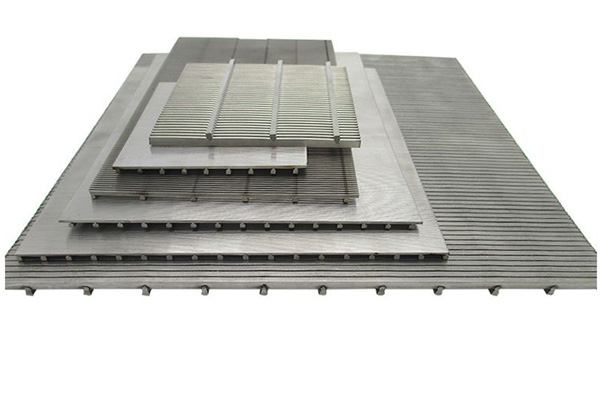
Slot size refers to the clear opening between adjacent profile wires. In wedge wire screen plates, this opening typically ranges from 0.020 mm (20 microns) to 10 mm or larger, covering applications from fine filtration to coarse separation.
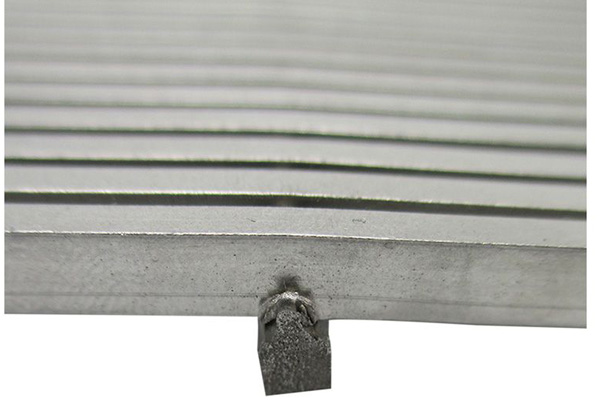
Because wedge wire uses a V-shaped profile, the slot widens inward. This geometry improves flow efficiency and reduces the risk of clogging compared to straight-hole designs.
2. Base Selection on Particle Size Distribution
The most reliable method for determining slot size is particle size analysis, commonly performed through sieve testing.
Key Principle:
Select a slot size equal to or slightly smaller than the characteristic particle size you want to retain.
Industry Guideline:
In many filtration and well-screen applications, slot size is chosen based on 40%–50% cumulative passing size (D40–D50).
This means the slot opening corresponds to the particle size at which 40–50% of the sample is finer.
Why This Matters:
Ensures effective retention of target particles
Prevents excessive clogging
Maintains stable filtration performance over time
 3. Balance Open Area and Flow Capacity
Slot size also affects the open area percentage, which determines how much fluid can pass through the screen.
Higher open area → Increased flow rate, lower pressure drop
Lower open area → Greater structural strength, finer filtration
An optimal design balances hydraulic efficiency with mechanical durability. For high-flow systems, slightly larger slots or optimized wire spacing may be required.
4. Consider Flow Direction and System Design
Wedge wire screens can operate in two primary flow configurations:
Outside-to-Inside (FITO): Solids are retained on the outer surface
Inside-to-Outside (OTIF): Solids accumulate on the inner surface
Slot size selection should align with the intended flow direction, as it influences how particles interact with the screen surface and how easily they can be removed.
5. Match Slot Size to Application Conditions
Different industries and environments require different slot size ranges and materials:
Typical Combinations:
Municipal wastewater / low chloride environments Slot size: 0.5 – 1.0 mm
Material: Stainless steel 304L
Coastal or industrial effluent (corrosive conditions) Slot size: 0.25 – 0.75 mm
Material: Stainless steel 316L
Sludge thickening / high solids content Slot size: 1.5 – 3.0 mm+
Material: Duplex stainless steel
These combinations reflect common engineering practices but should always be validated against specific process data.
6. Reference Common Slot Size Ranges
Below is a simplified reference for typical applications:
0.1 – 0.5 mm
Fine sand filtration, precision screening, wastewater treatment 0.5 – 1.5 mm
General water treatment, food processing, starch separation 1.5 – 3.0 mm+
Coarse material handling, mining, coal preparation This classification helps narrow initial selection before detailed optimization.
7. Account for Material and Corrosion Resistance
Slot size selection should not be separated from material choice. Corrosion, temperature, and chemical exposure all influence long-term performance.
304L Stainless Steel: Suitable for general use and low-corrosion environments
316L Stainless Steel: Preferred for chemical, food-grade, and marine conditions
Duplex or Specialty Alloys: Required for high-stress or aggressive environments
A mismatch between slot size and material can lead to deformation, wear, or premature failure.
8. Leverage the Self-Cleaning Design
One of the main advantages of wedge wire screens is their self-cleaning capability.
Slots widen inward, preventing blockage
Maintenance frequency is significantly reduced
This feature allows for more stable operation, especially in systems with continuous flow and high solids content.
9. Practical Selection Workflow
To ensure accurate slot size selection, follow this structured process:
1. Conduct particle size analysis (sieve test)
2. Identify target retention size (D40–D50 guideline)
3. Define flow rate and pressure conditions
4. Evaluate open area requirements
5. Select material based on environment
6. Confirm compatibility with system design
This method reduces guesswork and improves overall system efficiency.
A well-chosen slot size not only improves separation efficiency but also minimizes maintenance, reduces downtime, and extends equipment lifespan—making it a critical factor in any filtration system.
FAQ: Practical Questions from Buyers and Engineers
1. Can I use the same slot size for different materials?
Not recommended. Different materials have unique particle size distributions and flow behaviors. Each application should be evaluated independently to ensure proper filtration performance.
2. What happens if I oversize the slot for higher flow?
Oversizing increases flow rate but reduces filtration accuracy. This may result in product loss, downstream contamination, or reduced process efficiency.
3. Is laboratory testing necessary before final selection?
In many cases, yes. Lab or pilot testing provides real data on particle behavior and helps validate slot size choices before full-scale implementation.
4. How does slot size affect maintenance frequency?
Smaller slots may clog more easily, increasing cleaning frequency. However, wedge wire’s self-cleaning design helps mitigate this compared to other screen types.
5. Are custom slot sizes available?
Yes. Most manufacturers offer customized slot sizes and configurations to meet specific project requirements, especially for sp ecialized industrial processes.

 Engineering Principles Behind Vee Wire Scallops for Catalyst Support Systems
 Tower Internal Wedge Wire Pipe Maintenance and Reliability
 Catalyst Bed Support Grid Design for High Efficiency Reactor Flow
 Choosing the Right Vee Wire Scallops for High-Performance Radial Flow Internals
