Wedge wire screen plates have become a preferred solution in modern filtration and separation systems due to their unique structural design and consistent performance under demanding conditions. Compared with conventional mesh or perforated plates, they deliver higher efficiency, longer service life, and more reliable operation across a wide range of industries.
What Is a Wedge Wire Screen Plate?
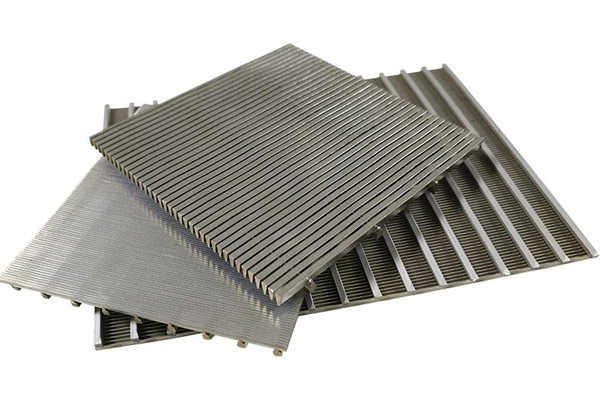
A wedge wire screen plate is a filtration component manufactured by welding V-shaped profile wires onto support rods. This construction forms continuous slot openings across the surface, enabling precise separation while maintaining structural strength.
The defining feature is the V-shaped (wedge) wire profile, which creates slots that are wider at the top and narrower toward the base. This geometry plays a critical role in preventing clogging and improving flow dynamics.
Core Advantages for Filtration and Support
1. Non-Clogging V-Shaped Profile
The wedge-shaped wire design ensures that particles passing through the slot are unlikely to become trapped inside the structure. Unlike straight-hole perforated plates, where particles can lodge and accumulate, the tapered slot allows debris to pass through or be flushed out.
Practical benefit:
Reduced blinding (clogging)
Stable filtration performance over time
Lower maintenance frequency
2. High Structural Strength and Load Capacity
Wedge wire screen plates are built through continuous welding between profile wires and support rods. This creates a rigid, self-supporting structure capable of withstanding high pressure and mechanical stress.
Typical advantages:
Excellent resistance to deformation
Suitable for heavy-duty environments (e.g., mining, wastewater treatment)
Reliable performance in high-solids applications
3. Continuous Slot Openings for Maximum Flow
Unlike perforated plates with discrete holes, wedge wire screens provide continuous slots across the entire surface. This significantly increases the open area available for flow.
Engineering impact:
Higher throughput
Lower pressure drop
Improved system efficiency
This makes them particularly effective in systems where maintaining flow rate is critical.
4. Precise and Consistent Filtration Accuracy
The spacing between adjacent wedge wires is precisely controlled during manufacturing. This ensures consistent slot size and reliable particle retention.
Why it matters:
Uniform separation performance
Better product quality control
Reduced variability compared to punched or woven materials
5. Easy Cleaning and Long Service Life
The smooth surface and non-clogging design make wedge wire screen plates easy to clean using backwashing or mechanical methods. Combined with corrosion-resistant materials such as stainless steel, they offer extended operational life.
Operational benefits:
Reduced downtime
Lower maintenance costs
Long-term reliability in harsh environments
Key Industrial Applications
Due to their versatility and durability, wedge wire screen plates are widely used in:
Water treatment systems (intake screens, filtration units)
Mining and mineral processing (dewatering, classification)
Food and beverage processing (solid-liquid separation)
Pulp and paper industry
Chemical and petrochemical processing
Their ability to handle both liquid-solid and gas-solid separation makes them adaptable to diverse operational requirements.
Why They Outperform Traditional Alternatives
When compared to perforated plates or woven mesh, wedge wire screen plates provide a combination of structural strength, filtration precision, and hydraulic efficiency that is difficult to match.
| Feature |
Wedge Wire Screen |
Perforated Plate |
Woven Mesh |
| Clogging Resistance |
Excellent |
Moderate |
Low |
| Open Area |
High |
Medium |
Medium |
| Strength |
High |
High |
Low |
| Filtration Precision |
High |
Moderate |
Moderate |
| Maintenance |
Low |
Medium |
High |
This balance of performance characteristics explains their growing adoption in critical industrial systems.
Design Considerations for Optimal Performance
To achieve the best results, engineers typically consider:
Slot size (based on particle size distribution)
Material selection (e.g., stainless steel grades)
Load requirements and support structure
Flow direction and system pressure
Cleaning method (backwash, mechanical, or chemical)
Proper customization ensures the screen performs efficiently within its specific application environment.
FAQ: Practical Questions from Buyers and Engineers
1. How do I choose the right slot size for my application?
Slot size should be s elected based on the smallest particle size you need to retain, typically allowing a safety margin to prevent unwanted passage while maintaining flow efficiency.
2. Are wedge wire screen plates suitable for corrosive environments?
Yes. They are commonly manufactured from stainless steel (such as 304 or 316), making them highly resistant to corrosion in water treatment, chemical, and marine environments.
3. Can wedge wire screens handle high-pressure systems?
They are well-suited for high-pressure applications due to their welded construction and strong support rod framework. Proper design specifications are essential to match pressure conditions.
4. How often do they need cleaning or maintenance?
Maintenance frequency is generally lower than traditional filters. In many systems, routine backwashing is sufficient to maintain performance.
5. What is the typical lifespan of a wedge wire screen plate?
With proper material selection and operating conditions, wedge wire screens can last significantly longer than mesh or perforated alternatives, often delivering years of continuous service.
6. Are they customizable for specific systems?
Yes. Dimensions, slot size, shape, and material can all be tailored to meet the exact requirements of your filtration or support system.


 Engineering Principles Behind Vee Wire Scallops for Catalyst Support Systems
 Tower Internal Wedge Wire Pipe Maintenance and Reliability
 Catalyst Bed Support Grid Design for High Efficiency Reactor Flow
 Choosing the Right Vee Wire Scallops for High-Performance Radial Flow Internals
