Wedge wire screen plates have become a cornerstone of modern filtration and separation systems across multiple industries. Known for their V-shaped profile, precise slot openings, and high mechanical strength, these screens deliver reliable performance in demanding environments where efficiency and durability are critical.
What Makes Wedge Wire Screen Plates Unique?
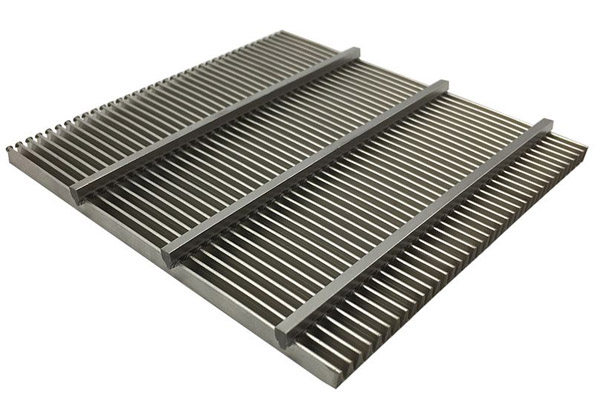
Wedge wire screen plates are manufactured by welding profile wires to support rods, forming continuous slots that are wider at the outer surface and narrower inward.
This design provides several functional advantages:
Non-clogging performance due to the V-shaped slot geometry
High open area, enabling greater flow rates
Precise filtration accuracy with consistent slot sizes
Excellent strength and durability under pressure and abrasion
Corrosion resistance, especially when made from stainless steel
These characteristics make them suitable for both fine filtration and heavy-duty industrial processes.
1. Water and Wastewater Treatment
Water treatment is the largest application sector for wedge wire screen plates.
Key Uses:
Intake screening in rivers, lakes, and seawater systems
Wastewater filtration in municipal and industrial plants
Sludge dewatering using sieve bend screens
Underdrain systems in sand filters and ion exchange units
Why They Work:
Their non-clogging structure ensures continuous operation with minimal maintenance, while precise slot sizes improve filtration efficiency and water quality.
2. Mining and Mineral Processing
Mining environments demand materials that can withstand abrasion, high loads, and corrosive slurries.
Key Uses:
Vibrating screen decks for sizing and classification
Centrifuge baskets for dewatering coal and minerals
Desliming screens for removing fine particles
Why They Work:
Wedge wire screens maintain structural integrity under heavy mechanical stress and provide consistent separation performance even with abrasive materials.
3. Food and Beverage Processing
Hygiene, safety, and consistency are critical in food production, making stainless steel wedge wire an ideal choice.
Key Uses:
Brewing systems (mash tun false bottoms)
Sugar processing (centrifugal and rotary screens)
Juice, dairy, and liquid food filtration
Grain drying and screening
Why They Work:
Their smooth surface, easy cleaning, and food-grade materials meet strict sanitary standards while ensuring efficient separation.
4. Oil, Gas, and Petrochemical Industry
In high-pressure and high-temperature environments, reliability is essential.
Key Uses:
Catalyst support grids in reactors
Water well screens for sand control
Resin traps in processing systems
Why They Work:
Wedge wire screens offer excellent mechanical strength and thermal resistance, ensuring long service life in harsh operating conditions.
5. Pulp and Paper Industry
This industry requires efficient separation of fibers and liquids throughout the production process.
Key Uses:
Pressure screen baskets for pulp cleaning
Dewatering screens for pulp slurry
Fiber recovery systems in white water circuits
Why They Work:
Their precise slot openings improve fiber retention while allowing efficient water removal, reducing material loss and improving process efficiency.
6. Chemical and Pharmaceutical Processing
Precision and consistency are essential in chemical and pharmaceutical production.
Key Uses:
Centrifuge baskets for crystal separation
Fine filtration systems in chemical processing
Solid-liquid separation in high-purity applications
Why They Work:
Wedge wire screens provide reliable separation accuracy and compatibility with corrosive chemicals and solvents.
7. Architectural and Environmental Applications
Beyond industrial use, wedge wire panels are increasingly used in infrastructure and environmental protection.
Key Uses:
Drainage systems and floor grates
Decorative architectural elements
Fish diversion and environmental protection screens
Why They Work:
Their combination of strength, aesthetics, and durability makes them suitable for both functional and design-oriented applications.
Common Forms of Wedge Wire Screen Plates
Wedge wire technology is available in several configurations to meet different application needs:
Sieve Bend Screens (DSM Screens) – curved panels for gravity dewatering
Cylindrical Screens – used in rotary drums and well screens
Flat Panels – for vibrating decks and filtration surfaces
Header Lateral Systems – for uniform flow distribution
Each form is designed to optimize flow behavior, filtration efficiency, and mechanical performance.
FAQ: Wedge Wire Screen Plates
1. How do I choose the right slot size?
Slot size depends on the particle size you need to retain. A general rule is to select a slot opening slightly smaller than the target particles while maintaining sufficient flow rate.
2. What materials are commonly used?
Stainless steel (such as 304 and 316) is the most common due to its corrosion resistance, but other alloys can be used for sp ecialized environments.
3. Are wedge wire screens suitable for high-pressure systems?
Yes. Their welded structure provides high mechanical strength, making them suitable for high-pressure and heavy-load applications.
4. How do they reduce clogging compared to perforated plates?
The V-shaped wire profile prevents particles from becoming lodged in the स्लॉट, allowing debris to pass through more easily or be flushed away.
5. What is the typical lifespan of a wedge wire screen plate?
Lifespan varies by application, but with proper material selection and maintenance, they can last several years even in harsh environments.
6. Can wedge wire screens be customized?
Yes. They can be manufactured with custom slot sizes, shapes, dimensions, and configurations to meet specific project requirements.
7. Are they easy to maintain?
Maintenance is relatively simple. Most systems allow for backwashing or cleaning without dismantling, reducing operational downtime.


 Engineering Principles Behind Vee Wire Scallops for Catalyst Support Systems
 Tower Internal Wedge Wire Pipe Maintenance and Reliability
 Catalyst Bed Support Grid Design for High Efficiency Reactor Flow
 Choosing the Right Vee Wire Scallops for High-Performance Radial Flow Internals
