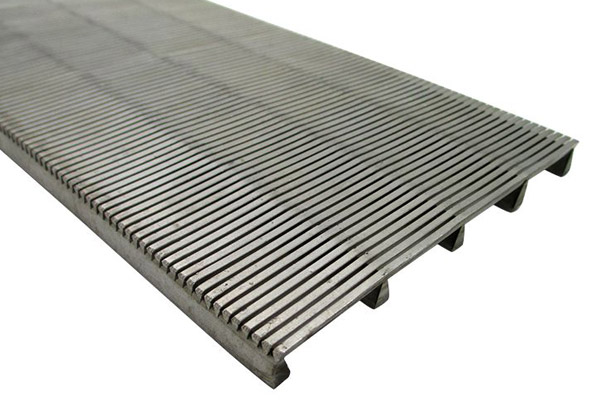
Wedge wire screen plates are stainless steel filtration components widely used in water treatment systems for efficient solid-liquid separation. Manufactured by welding V-shaped profile wires onto support rods, they create continuous slot openings that provide high flow capacity and strong anti-clogging performance.
Compared with traditional perforated plates or mesh filters, wedge wire screens offer better filtration efficiency, lower maintenance requirements, and longer service life. Their inwardly widening slot design helps prevent particle blockage while maintaining stable water flow.
Main Advantages of Wedge Wire Screen Plates
Non-Clogging Structure
The V-shaped wire profile reduces particle accumulation and allows debris to be removed more easily during operation.
High Open Area
Continuous slot openings provide excellent hydraulic capacity and lower pressure loss, improving overall filtration efficiency.
Corrosion Resistance
Most wedge wire screen plates are made from SS304 or SS316L stainless steel, making them suitable for harsh water treatment environments, including seawater and industrial wastewater systems.
Strong Mechanical Performance
The welded structure offers high strength and durability, even under heavy loads and continuous operation.
Applications in Water Treatment Systems
Wastewater Pre-Treatment
Wedge wire screens are commonly installed in rotary drum screens and static sieve systems to remove solids, fibers, and debris from municipal sewage and industrial wastewater.
Water Intake Systems
They are widely used as intake screens to protect pumps and pipelines from debris while reducing clogging risks in river, lake, and seawater intake systems.
Sludge Dewatering
In sludge treatment equipment, wedge wire screen plates help separate water from solid waste efficiently, improving dewatering performance.
Filter Underdrain Systems
They are also used as support screens in sand filters, ion exchange systems, and water distribution systems to ensure uniform flow and media retention.
Common Design Types
Wedge wire screens can be customized into several configurations based on operational requirements:
Flat screen plates
Curved sieve screens
Cylindrical or tubular screens
Different designs support various flow rates, installation methods, and filtration applications.
Why Water Treatment Facilities Choose Wedge Wire Screens
Modern water treatment plants require filtration systems that combine efficiency, durability, and low maintenance. Wedge wire screen plates help achieve these goals by:
Improving filtration consistency
Reducing pressure drop
Lowering cleaning frequency
Supporting long-term continuous operation
Their adaptability and corrosion resistance make them a reliable solution for both municipal and industrial water treatment systems.
FAQ
What materials are commonly used for wedge wire screen plates?
SS304 and SS316L stainless steel are the most common materials because of their corrosion resistance and durability.
Are wedge wire screens suitable for high-flow systems?
Yes. Their high open area design allows efficient filtration while maintaining strong hydraulic capacity.
Can wedge wire screen plates be customized?
Yes. Slot size, dimensions, wire profile, and material grade can all be customized according to application requirements.
What industries use wedge wire screen plates besides water treatment?
They are also widely used in mining, food processing, petrochemical, pulp and paper, and pharmaceutical industries.


 Engineering Principles Behind Vee Wire Scallops for Catalyst Support Systems
 Tower Internal Wedge Wire Pipe Maintenance and Reliability
 Catalyst Bed Support Grid Design for High Efficiency Reactor Flow
 Choosing the Right Vee Wire Scallops for High-Performance Radial Flow Internals
